

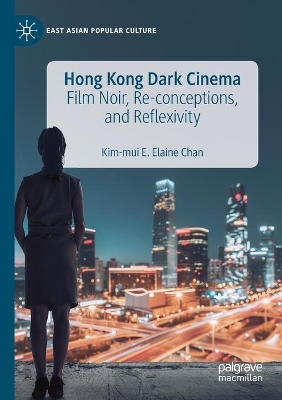
This book is a scholarly investigation of the historical development and contemporary transformation of film noir in today’s Hong Kong. Focusing on the evolvement of cinematic narratives, aesthetics, and techniques, the author balances a deep reading of the multiple filmic plots with a discussion of the cinematic portrayals of gender, romance, identities and power relations. Nuancing the prototypical cinematic form and tragic sense of classical film noir, the recent Hong Kong cinema turns around the classical generic role of film noir at the turn of the century to convey very different messages—joy, hope or love. This book examines how the mainstream cinema, or pre-and-post-Hong Kong cinema in particular, applies a peculiar strategy that makes rooms for the audience to enjoy a pleasure-giving process of reflexivity and also critique the mainstream ideology. With new analytical approaches and angles, this book breaks new ground in offering transcultural and cross-genre analyses on the cinema and its impact in local and international markets. This book is the first major scholarly investigation of the historical development and contemporary transformation of film noir in today’s Hong Kong. Focusing on the evolvement of cinematic narratives, aesthetics, and techniques, the author balances a deep reading of the multiple filmic plots with a refreshing discussion of the cinematic portrayals of gender, romance, identities and power relations. This book also revisits conceptual categories developed by Foucault, Lacan, Derrida and Butler.
| ISBN: | 9783030282950 |
| Publication date: | 20th December 2020 |
| Author: | KimMui E Elaine Chan |
| Publisher: | Springer Nature Switzerland AG |
| Format: | Paperback |
| Pagination: | 241 pages |
| Series: | East Asian Popular Culture |
| Genres: |
Film: styles and genres Popular culture Film history, theory or criticism |
This book is a scholarly investigation of the historical development and contemporary transformation of film noir in today’s Hong Kong. Focusing on the evolvement of cinematic narratives, aesthetics, and techniques, the author balances a deep reading of the multiple filmic plots with a discussion of the cinematic portrayals of gender, romance, identities and power relations. Nuancing the prototypical cinematic form and tragic sense of classical film noir, the recent Hong Kong cinema turns around the classical generic role of film noir at the turn of the century to convey very different messages—joy, hope or love. This book examines how the mainstream cinema, or pre-and-post-Hong Kong cinema in particular, applies a peculiar strategy that makes rooms for the audience to enjoy a pleasure-giving process of reflexivity and also critique the mainstream ideology. With new analytical approaches and angles, this book breaks new ground in offering transcultural and cross-genre analyses on the cinema and its impact in local and international markets. This book is the first major scholarly investigation of the historical development and contemporary transformation of film noir in today’s Hong Kong. Focusing on the evolvement of cinematic narratives, aesthetics, and techniques, the author balances a deep reading of the multiple filmic plots with a refreshing discussion of the cinematic portrayals of gender, romance, identities and power relations. This book also revisits conceptual categories developed by Foucault, Lacan, Derrida and Butler.
Hong Kong Dark Cinema features in the following genres: Film: styles and genres, Popular culture, Film history, theory or criticism
Hong Kong Dark Cinema is available in Paperback, Hardback
Hong Kong Dark Cinema was written by KimMui E Elaine Chan and published by Springer Nature Switzerland AG
Hong Kong Dark Cinema has 241 pages
Yes it is part of East Asian Popular Culture series
£71.99