

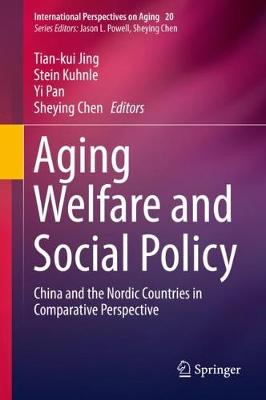
This perceptive volume presents conceptual, theoretical, and empirical approaches to social policy analysis comparing China and Nordic countries in their treatment of the elderly. An international panel of experts offers valuable policy insights into issues of housing, community care, family care, pensions and social security, and mental health as China translates and adapts Western examples, particularly those set by Norway, Sweden, and Finland. The book contrasts shared issues in the contexts of economic history, accountability and service improvements, and sustainability while also examining specifically Chi nese problems such as care gaps between urban and rural elders. Coverage also considers the centrality of aging policy in China as the nation works toward its long-term goal of eradicating poverty. Included among the topics: Building a welfare system with Chinese characteristics: from a residual type to moderate universalism. “Aging in community”: historical and comparative study of aging welfare and social policy. Sweden: aging welfare and social policy in the 21st century. Policy responses to aging: care services for the elderly in Norway. China’s elderly care policy and its future trends. Aging Welfare and Social Policy will interest professionals and researchers addressing questions of Chinese and comparative social policy, health psychologists, and sociologists focused on family, youth, and aging.
| ISBN: | 9783030108946 |
| Publication date: | 27th April 2019 |
| Author: | Tiankui Jing |
| Publisher: | Springer Nature Switzerland AG |
| Format: | Hardback |
| Pagination: | 245 pages |
| Series: | International Perspectives on Aging |
| Genres: |
Care of the elderly Sociology: family and relationships Health psychology Age groups: the elderly Age groups: adults Population and demography |
This perceptive volume presents conceptual, theoretical, and empirical approaches to social policy analysis comparing China and Nordic countries in their treatment of the elderly. An international panel of experts offers valuable policy insights into issues of housing, community care, family care, pensions and social security, and mental health as China translates and adapts Western examples, particularly those set by Norway, Sweden, and Finland. The book contrasts shared issues in the contexts of economic history, accountability and service improvements, and sustainability while also examining specifically Chi nese problems such as care gaps between urban and rural elders. Coverage also considers the centrality of aging policy in China as the nation works toward its long-term goal of eradicating poverty. Included among the topics: Building a welfare system with Chinese characteristics: from a residual type to moderate universalism. “Aging in community”: historical and comparative study of aging welfare and social policy. Sweden: aging welfare and social policy in the 21st century. Policy responses to aging: care services for the elderly in Norway. China’s elderly care policy and its future trends. Aging Welfare and Social Policy will interest professionals and researchers addressing questions of Chinese and comparative social policy, health psychologists, and sociologists focused on family, youth, and aging.
Aging Welfare and Social Policy features in the following genres: Care of the elderly, Sociology: family and relationships, Health psychology, Age groups: the elderly, Age groups: adults, Population and demography
Aging Welfare and Social Policy is available in Hardback
Aging Welfare and Social Policy was written by Tiankui Jing and published by Springer Nature Switzerland AG
Aging Welfare and Social Policy has 245 pages
Yes it is part of International Perspectives on Aging series
£98.99