LoveReading Says
One of One of Will Self's favourite books.
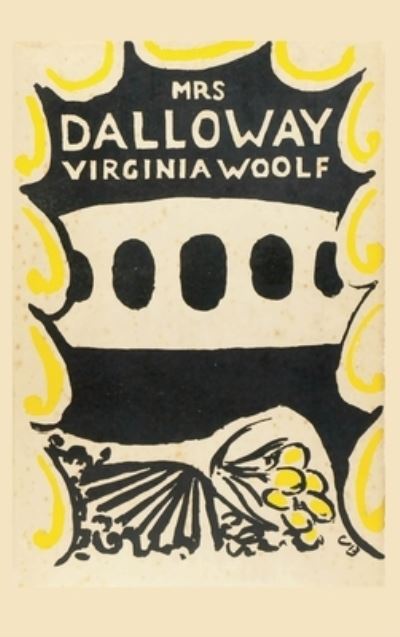
On a June morning in 1923, Clarissa Dalloway is preparing for a party and remembering her past. Elsewhere in London, Septimus Smith is suffering from shell-shock and on the brink of madness. Their days interweave and their lives converge as the party reaches its glittering climax.
LoveReading
About Mrs. Dalloway
Mrs. Dalloway is a novel by Virginia Woolf that details a day in the life of Clarissa Dalloway, a fictional high-society woman in post-WWI England. It is one of Woolf's best-known novels.
Read the full description
Find This Book In
Mrs. Dalloway Synopsis
Mrs. Dalloway is a novel by Virginia Woolf that details a day in the life of Clarissa Dalloway, a fictional high-society woman in post-WWI England. It is one of Woolf's best-known novels.
Clarissa Dalloway goes around London in the morning, getting ready to host a party that evening. The nice day reminds her of her youth spent in the countryside in Bourton and makes her wonder about her choice of husband; she married the reliable Richard Dalloway instead of the enigmatic and demanding Peter Walsh, and she "had not the option" to be with a close female friend, Sally Seton. Peter reintroduces these conflicts by paying a visit that morning.
Septimus Warren Smith, a First World War veteran suffering from deferred traumatic stress, spends his day in the park with his Italian-born wife Lucrezia, where Peter Walsh observes them. Septimus is visited by frequent and indecipherable hallucinations, mostly concerning his dear friend Evans who died in the war. Later that day, after he is prescribed involuntary commitment to a psychiatric hospital, he commits suicide by jumping out of a window.
Clarissa's party in the evening is a slow success. It is attended by most of the characters she has met throughout the book, including people from her past. She hears about Septimus' suicide at the party and gradually comes to admire this stranger's act, which she considers an effort to preserve the purity of his happiness.
About This Edition
| ISBN: |
9781950330744 |
| Publication date: |
27th January 2021 |
| Author: |
Virginia Woolf |
| Publisher: |
Classic Wisdom Reprint an imprint of Murine Publications LLC |
| Format: |
Hardback |
| Pagination: |
146 pages |
| Primary Genre |
Classic fiction: general and literary
|
| Other Genres: |
|
Virginia Woolf Press Reviews
'One of the few genuine innovations in the history of the novel'- New Yorker
'One of her greatest achievements, a book whose afterlife continues to inspire new generations of writers and readers'- Guardian
About Virginia Woolf
Virginia Woolf is now recognized as a major twentieth-century author, a great novelist and essayist and a key figure in literary history as a feminist and a modernist. Born in 1882, she was the daughter of the editor and critic Leslie Stephen, and suffered a traumatic adolescence after the deaths of her mother, in 1895, and her step-sister Stella, in 1897, leaving her subject to breakdowns for the rest of her life. Her father died in 1904 and two years later her favourite brother Thoby died suddenly of typhoid.
With her sister, the painter Vanessa Bell, she was drawn into the company of writers and artists such as Lytton Strachey and Roger Fry, later known as the Bloomsbury Group. Among them she met Leonard Woolf, whom she married in 1912, and together they founded the Hogarth Press in 1917, which was to publish the work of T. S. Eliot, E. M. Forster and Katherine Mansfield as well as the earliest translations of Freud. Woolf lived an energetic life among friends and family, reviewing and writing, and dividing her time between London and the Sussex Downs. In 1941, fearing another attack of mental illness, she drowned herself.
Her first novel, The Voyage Out, appeared in 1915, and she then worked through the transitional Night and Day (1919) to the highly experimental and impressionistic Jacob’s Room (1922). From then on her fiction became a series of brilliant and extraordinarily varied experiments, each one searching for a fresh way of presenting the relationship between individual lives and the forces of society and history. She was particularly concerned with women’s experience, not only in her novels but also in her essays and her two books of feminist polemic, A Room of One’s Own (1929) and Three Guineas (1938).
Her major novels include Mrs Dalloway (1925), the historical fantasy Orlando (1928), written for Vita Sackville-West, the extraordinarily poetic vision of The Waves (1931), the family saga of The Years (1937), and Between the Acts (1941).
More About Virginia Woolf


.jpg)