

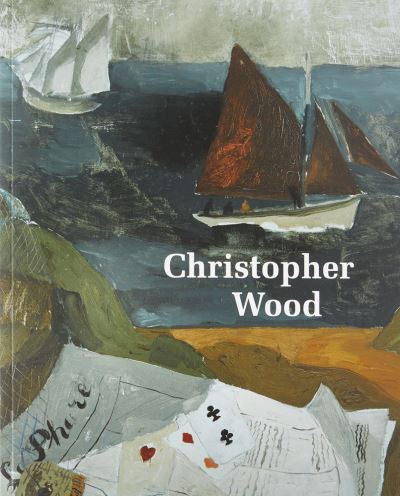
Christopher Wood ('Kit') as he was more commonly known) was born in Liverpool. At 14 he was diagnosed with septicaemia and confined to his bed for three years, during this time he took up drawing. Wood moved to London and worked as an importer of dried fruit, his route to and from work took him through a West End that was still steeped in the bohemian atmosphere of the pre-war years. Inspired by the comings and goings of this exuberant life, Wood would sit sketching for hours. During this time Wood met Alphonse Kahn, one of the best-connected men in the Paris art world, who invited him to Paris.
Through extended visits to Paris between 1921 and 1924 he came into contact with the European avant-garde and established himself as a prominent and popular artist winning the admiration of Picasso and Jean Cocteau. Wood was one of the very few British artists to recognise and respond to the new landscape of modernism and have a solo exhibition in Paris at that time. During his Parisian years Wood became addicted to opium and in 1930 was tragically killed by a train at Salisbury station whilst under the influence of the drug.
Richly illustrated with over 40 colour illustrations, this is a comprehensive account from the largest public collection of works by Christopher Wood. The book features writings by Jim Ede on Wood, an essay by curator Elizabeth Fisher, the artist John Piper and the poet Max Jacob, alongside previously unpublished extracts from letters between Wood and Jim Ede, Ben and Winifred Nicholson, and his mother Clare Wood.
| ISBN: | 9781904561446 |
| Publication date: | 1st July 2013 |
| Author: | Christopher Wood, Kettles Yard Gallery |
| Publisher: | Kettle's Yard Gallery an imprint of Kettle's Yard, University of Cambridge |
| Format: | Paperback |
| Pagination: | 95 pages |
| Series: | Kettle's Yard, University of Cambridge |
| Genres: |
Exhibition catalogues and specific collections Individual artists, art monographs |
Christopher Wood ('Kit') as he was more commonly known) was born in Liverpool. At 14 he was diagnosed with septicaemia and confined to his bed for three years, during this time he took up drawing. Wood moved to London and worked as an importer of dried fruit, his route to and from work took him through a West End that was still steeped in the bohemian atmosphere of the pre-war years. Inspired by the comings and goings of this exuberant life, Wood would sit sketching for hours. During this time Wood met Alphonse Kahn, one of the best-connected men in the Paris art world, who invited him to Paris.
Through extended visits to Paris between 1921 and 1924 he came into contact with the European avant-garde and established himself as a prominent and popular artist winning the admiration of Picasso and Jean Cocteau. Wood was one of the very few British artists to recognise and respond to the new landscape of modernism and have a solo exhibition in Paris at that time. During his Parisian years Wood became addicted to opium and in 1930 was tragically killed by a train at Salisbury station whilst under the influence of the drug.
Richly illustrated with over 40 colour illustrations, this is a comprehensive account from the largest public collection of works by Christopher Wood. The book features writings by Jim Ede on Wood, an essay by curator Elizabeth Fisher, the artist John Piper and the poet Max Jacob, alongside previously unpublished extracts from letters between Wood and Jim Ede, Ben and Winifred Nicholson, and his mother Clare Wood.
Christopher Wood features in the following genres: Exhibition catalogues and specific collections, Individual artists, art monographs
Christopher Wood is available in Paperback
Christopher Wood was written by Christopher Wood, Kettles Yard Gallery and published by Kettle's Yard Gallery an imprint of Kettle's Yard, University of Cambridge
Christopher Wood has 95 pages
Yes it is part of Kettle's Yard, University of Cambridge series
£10.80