

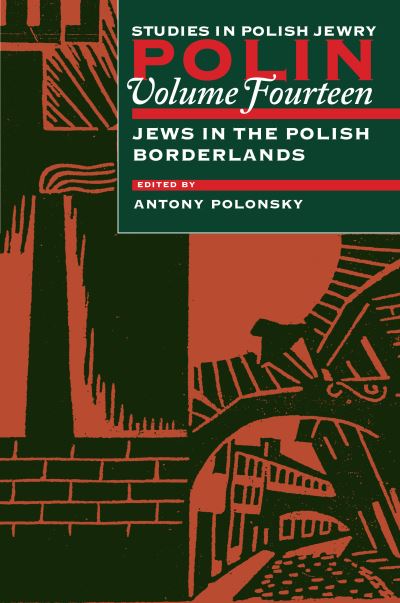
The Polish-Lithuanian Commonwealth, created in 1569, covered a wide spectrum of faiths and languages. The nobility, who were the main focus of Polishness, were predominantly Catholic, particularly from the later seventeenth century; the peasantry included Catholics, Protestants, and members of the Orthodox faith, while nearly half the urban population, and some 10 per cent of the total population, was Jewish. The partition of Poland at the end of the eighteenth century and the subsequent struggle to regain Polish independence raised the question of what the boundaries of a future state should be, and who qualified as a Pole. The partitioning powers, for their part, were determined to hold on to the areas they had annexed: Prussia tried to strengthen the German element in Poland; the Habsburgs encouraged the development of a Ukrainian consciousness in Austrian Galicia to act as a counterweight to the dominant Polish nobility; and Russia, while allowing the Kingdom of Poland to enjoy substantial autonomy, treated the remaining areas it had annexed as part of the tsarist monarchy. When Poland became independent after the First World War more than a third of its population were thus Ukrainians, Belarusians, Germans, Jews, and Lithuanians, many of whom had been influenced by nationalist movements. The core articles in the volume focus especially on the triangular relationship between Poles, Jews, and Germans in western Poland, and between the different national groups in what are today Lithuania, Belarus, and Ukraine. In addition, the New Views section investigates aspects of Jewish life in pre-partition Poland and in the nineteenth and twentieth centuries. There are also the regular Review Essay and Book Review sections.
| ISBN: | 9781874774709 |
| Publication date: | 1st October 2001 |
| Author: | Antony Polonsky |
| Publisher: | The Littman Library of Jewish Civilization an imprint of Liverpool University Press |
| Format: | Paperback |
| Pagination: | 478 pages |
| Series: | Polin: Studies in Polish Jewry |
| Genres: |
Social groups: religious groups and communities European history |
The Polish-Lithuanian Commonwealth, created in 1569, covered a wide spectrum of faiths and languages. The nobility, who were the main focus of Polishness, were predominantly Catholic, particularly from the later seventeenth century; the peasantry included Catholics, Protestants, and members of the Orthodox faith, while nearly half the urban population, and some 10 per cent of the total population, was Jewish. The partition of Poland at the end of the eighteenth century and the subsequent struggle to regain Polish independence raised the question of what the boundaries of a future state should be, and who qualified as a Pole. The partitioning powers, for their part, were determined to hold on to the areas they had annexed: Prussia tried to strengthen the German element in Poland; the Habsburgs encouraged the development of a Ukrainian consciousness in Austrian Galicia to act as a counterweight to the dominant Polish nobility; and Russia, while allowing the Kingdom of Poland to enjoy substantial autonomy, treated the remaining areas it had annexed as part of the tsarist monarchy. When Poland became independent after the First World War more than a third of its population were thus Ukrainians, Belarusians, Germans, Jews, and Lithuanians, many of whom had been influenced by nationalist movements. The core articles in the volume focus especially on the triangular relationship between Poles, Jews, and Germans in western Poland, and between the different national groups in what are today Lithuania, Belarus, and Ukraine. In addition, the New Views section investigates aspects of Jewish life in pre-partition Poland and in the nineteenth and twentieth centuries. There are also the regular Review Essay and Book Review sections.
Polin: Studies in Polish Jewry Volume 14 features in the following genres: Social groups: religious groups and communities, European history
Polin: Studies in Polish Jewry Volume 14 is available in Paperback
Polin: Studies in Polish Jewry Volume 14 was written by Antony Polonsky and published by The Littman Library of Jewish Civilization an imprint of Liverpool University Press
Polin: Studies in Polish Jewry Volume 14 has 478 pages
Yes it is part of Polin: Studies in Polish Jewry series