

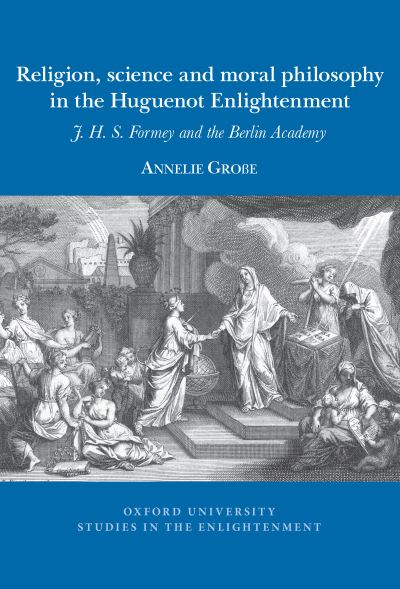
Religion, Science and Moral Philosophy in the Huguenot Enlightenment makes two significant contributions to existing scholarship on the Enlightenment. Firstly, as an author, journalist, translator, and inexhaustible letter writer, the Huguenot pastor and secretary of the Berlin Academy of Science, Samuel Formey, was involved in most of the philosophical debates in the European Republic of Letters during the second half of the eighteenth century. This is the first monograph dedicated solely to Formey's multifaceted work. Secondly, the book recasts the concept of Religious Enlightenment by considering Formey as a pastor-philosopher whose concept of philosophy included revealed religion instead of perpetuating the image of him as an 'enemy of Enlightenment' who opposed the philosophy of his time by referring to religion.
More precisely, the book explores the notion of the compatibility between reason and faith in Formey's thought on the existence of God, the freedom of will, divine providence and other questions relating to religion and metaphysics. It shows how Formey altered his portrayal of the relation between reason and faith depending on the genre and immediate context of his writings. The broader contextualisation of Formey's arguments in German rationalist philosophy and Calvinist theology unveils not only the overlaps between Wolffianism and eighteenth-century Calvinism but also gives an impression of the diversity of the thought of Huguenot pastors and philosophers during the Enlightenment.
| ISBN: | 9781837644032 |
| Publication date: | 13th February 2024 |
| Author: | Annelie Groe |
| Publisher: | Voltaire Foundation an imprint of Liverpool University Press |
| Format: | Paperback |
| Pagination: | 320 pages |
| Series: | Oxford University Studies in the Enlightenment |
| Genres: |
Western philosophy: Enlightenment Philosophy of religion |
Religion, Science and Moral Philosophy in the Huguenot Enlightenment makes two significant contributions to existing scholarship on the Enlightenment. Firstly, as an author, journalist, translator, and inexhaustible letter writer, the Huguenot pastor and secretary of the Berlin Academy of Science, Samuel Formey, was involved in most of the philosophical debates in the European Republic of Letters during the second half of the eighteenth century. This is the first monograph dedicated solely to Formey's multifaceted work. Secondly, the book recasts the concept of Religious Enlightenment by considering Formey as a pastor-philosopher whose concept of philosophy included revealed religion instead of perpetuating the image of him as an 'enemy of Enlightenment' who opposed the philosophy of his time by referring to religion.
More precisely, the book explores the notion of the compatibility between reason and faith in Formey's thought on the existence of God, the freedom of will, divine providence and other questions relating to religion and metaphysics. It shows how Formey altered his portrayal of the relation between reason and faith depending on the genre and immediate context of his writings. The broader contextualisation of Formey's arguments in German rationalist philosophy and Calvinist theology unveils not only the overlaps between Wolffianism and eighteenth-century Calvinism but also gives an impression of the diversity of the thought of Huguenot pastors and philosophers during the Enlightenment.
Religion, Science and Moral Philosophy in the Huguenot Enlightenment features in the following genres: Western philosophy: Enlightenment, Philosophy of religion
Religion, Science and Moral Philosophy in the Huguenot Enlightenment is available in Paperback
Religion, Science and Moral Philosophy in the Huguenot Enlightenment was written by Annelie Groe and published by Voltaire Foundation an imprint of Liverpool University Press
Religion, Science and Moral Philosophy in the Huguenot Enlightenment has 320 pages
Yes it is part of Oxford University Studies in the Enlightenment series