

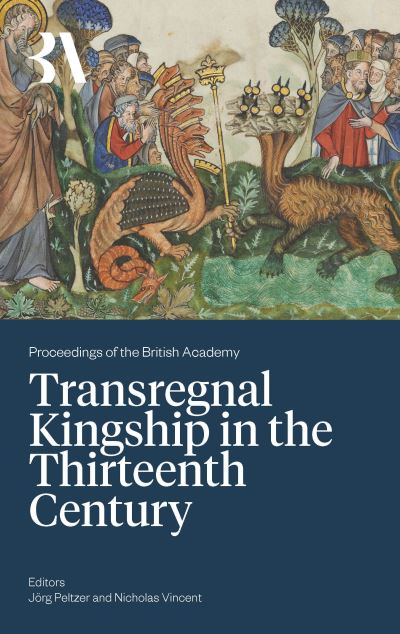
Transregnal Kingship in the Thirteenth Century explores a wide-spread European phenomenon: rulership over multiple kingdoms, or a kingdom in combination with major non-royal lordships elsewhere. Perceptions of royal authority and kingly sovereignty changed significantly during the thirteenth century, and as the role played by kingdoms as sovereign polities was strengthened, the framework for transregnal kingship shifted. This volumes investigates the consequences, examining the theory, perception and administrative practices of transregnal kingship. Intended to provide a coherent picture that itself may facilitate comparisons, the work focuses on four distinct, but significantly intertwined polities: The Empire, France, The Angevin Empire, and the Papacy. Despite its frequent occurrence, transregnal kingship played a relatively small role in contemporary political thought, and transregnal practice took a great variety of forms, showing rulers and the ruled adapting to circumstance rather than pursuing any pre-conceived grand strategy. Meanwhile, the ruler's frequent physical absence provoked the creation of multiple forms of vice-regal power. In the Empire, it also led to an increased use of arbitration as a means to solve disputes at regional level. Finally, an analysis of architecture and the built environment suggests that such things exhibit a fascinating combination of the political and the merely fashionable.
| ISBN: | 9781836245919 |
| Publication date: | 29th August 2025 |
| Author: | Jörg Peltzer, Nicholas Vincent |
| Publisher: | The British Academy an imprint of Liverpool University Press |
| Format: | Hardback |
| Pagination: | 304 pages |
| Series: | Proceedings of the British Academy |
| Genres: |
European history: medieval period, middle ages Politics and government |
Transregnal Kingship in the Thirteenth Century explores a wide-spread European phenomenon: rulership over multiple kingdoms, or a kingdom in combination with major non-royal lordships elsewhere. Perceptions of royal authority and kingly sovereignty changed significantly during the thirteenth century, and as the role played by kingdoms as sovereign polities was strengthened, the framework for transregnal kingship shifted. This volumes investigates the consequences, examining the theory, perception and administrative practices of transregnal kingship. Intended to provide a coherent picture that itself may facilitate comparisons, the work focuses on four distinct, but significantly intertwined polities: The Empire, France, The Angevin Empire, and the Papacy. Despite its frequent occurrence, transregnal kingship played a relatively small role in contemporary political thought, and transregnal practice took a great variety of forms, showing rulers and the ruled adapting to circumstance rather than pursuing any pre-conceived grand strategy. Meanwhile, the ruler's frequent physical absence provoked the creation of multiple forms of vice-regal power. In the Empire, it also led to an increased use of arbitration as a means to solve disputes at regional level. Finally, an analysis of architecture and the built environment suggests that such things exhibit a fascinating combination of the political and the merely fashionable.
Transregnal Kingship in the Thirteenth Century features in the following genres: European history: medieval period, middle ages, Politics and government
Transregnal Kingship in the Thirteenth Century is available in Hardback
Transregnal Kingship in the Thirteenth Century was written by Jörg Peltzer, Nicholas Vincent and published by The British Academy an imprint of Liverpool University Press
Transregnal Kingship in the Thirteenth Century has 304 pages
Yes it is part of Proceedings of the British Academy series