

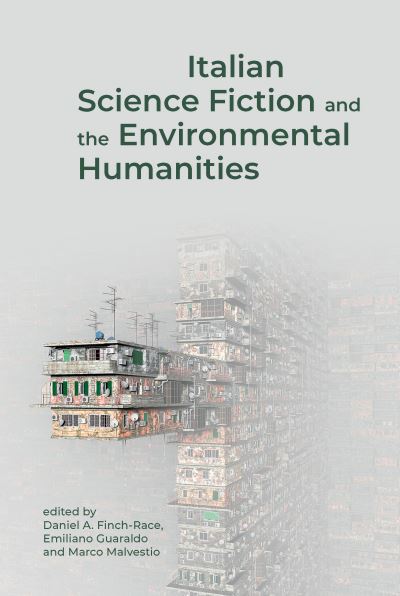
This volume explores Italian science fiction from the nineteenth century to the twenty-first, covering literary texts, films, music and visual works by figures as diverse as Maria Rosa Cutrufelli, Peter Kolosimo, Primo Levi, Antonio Margheriti, Gilda Musa and Roberto Vacca. It broadens the horizons of both Italian studies and the environmental humanities by addressing a long-neglected genre, and expands our understanding of relations between the ecological, the imaginary and the sociopolitical. The chapters draw on a variety of methodological frameworks, including animal studies, ecocriticism, ecofeminism, eco-media studies, energy humanities and posthumanism. The reader will gain insights into consequential topics such as anthropocentrism/speciesism, ecomodernist thought, environmental justice struggles at the planetary and regional level, non-human and new materialist ontologies, utopian/dystopian philosophies and prospects for transitioning beyond the crisis of petro-modernity through the construction of post-depletion futures.
Open Access versions of the introduction and six of the book chapters are available on the Liverpool University Press website.
| ISBN: | 9781802078701 |
| Publication date: | 12th December 2023 |
| Author: | Daniel A FinchRace, Emiliano Guaraldo, Marco Malvestio |
| Publisher: | Liverpool University Press |
| Format: | Hardback |
| Pagination: | 240 pages |
| Series: | Liverpool Science Fiction Texts and Studies |
| Genres: |
Literary studies: fiction, novelists and prose writers Literary studies: c 1800 to c 1900 Literary studies: c 1900 to c 2000 Literary studies: from c 2000 Environmentalist thought and ideology |
This volume explores Italian science fiction from the nineteenth century to the twenty-first, covering literary texts, films, music and visual works by figures as diverse as Maria Rosa Cutrufelli, Peter Kolosimo, Primo Levi, Antonio Margheriti, Gilda Musa and Roberto Vacca. It broadens the horizons of both Italian studies and the environmental humanities by addressing a long-neglected genre, and expands our understanding of relations between the ecological, the imaginary and the sociopolitical. The chapters draw on a variety of methodological frameworks, including animal studies, ecocriticism, ecofeminism, eco-media studies, energy humanities and posthumanism. The reader will gain insights into consequential topics such as anthropocentrism/speciesism, ecomodernist thought, environmental justice struggles at the planetary and regional level, non-human and new materialist ontologies, utopian/dystopian philosophies and prospects for transitioning beyond the crisis of petro-modernity through the construction of post-depletion futures.
Open Access versions of the introduction and six of the book chapters are available on the Liverpool University Press website.
Italian Science Fiction and the Environmental Humanities features in the following genres: Literary studies: fiction, novelists and prose writers, Literary studies: c 1800 to c 1900, Literary studies: c 1900 to c 2000, Literary studies: from c 2000, Environmentalist thought and ideology
Italian Science Fiction and the Environmental Humanities is available in Hardback
Italian Science Fiction and the Environmental Humanities was written by Daniel A FinchRace, Emiliano Guaraldo, Marco Malvestio and published by Liverpool University Press
Italian Science Fiction and the Environmental Humanities has 240 pages
Yes it is part of Liverpool Science Fiction Texts and Studies series