

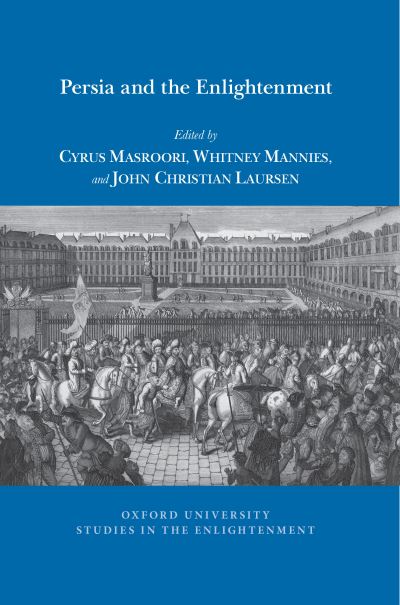
Since the 5th century BCE Persia has played a significant part in representing the "Other" against which European identity has been constructed. What makes the case of Persia unique in this process of identity formation is the ambivalent attitude that Europe has shown in its imaginary about Persia.
Persia is arguably the nation of "the Orient" most referred to in Early Modern European writings, frequently mentioned in various discourses of the Enlightenment including theology, literature, and political theory. What was the appeal of Persia to such a diverse intellectual population in Enlightenment Europe? How did intellectuals engage with the 'facts' about Persia? In what ways did utilizing Persia contribute to the development of modern European identities? In this volume, an international group of scholars with diverse academic backgrounds has tackled these and other questions related to the Enlightenment's engagement with Persia. In doing so, Persia and the Enlightenment questions reductionist assessments of Modern Europe's encounter with the Middle East, where a complex engagement is simplified to a confrontation between liberalism and Islam, or an exaggerated Orientalism. By carefully studying Persia in the Enlightenment narratives, this volume throws new light on the complexity of intercultural encounters and their impact on the shaping of collective identities.
| ISBN: | 9781800348578 |
| Publication date: | 13th September 2021 |
| Author: | Cyrus Masroori, Whitney Mannies, John Christian Laursen |
| Publisher: | Voltaire Foundation an imprint of Liverpool University Press |
| Format: | Paperback |
| Pagination: | 368 pages |
| Series: | Oxford University Studies in the Enlightenment |
| Genres: |
Western philosophy: Enlightenment Social and political philosophy |
Since the 5th century BCE Persia has played a significant part in representing the "Other" against which European identity has been constructed. What makes the case of Persia unique in this process of identity formation is the ambivalent attitude that Europe has shown in its imaginary about Persia.
Persia is arguably the nation of "the Orient" most referred to in Early Modern European writings, frequently mentioned in various discourses of the Enlightenment including theology, literature, and political theory. What was the appeal of Persia to such a diverse intellectual population in Enlightenment Europe? How did intellectuals engage with the 'facts' about Persia? In what ways did utilizing Persia contribute to the development of modern European identities? In this volume, an international group of scholars with diverse academic backgrounds has tackled these and other questions related to the Enlightenment's engagement with Persia. In doing so, Persia and the Enlightenment questions reductionist assessments of Modern Europe's encounter with the Middle East, where a complex engagement is simplified to a confrontation between liberalism and Islam, or an exaggerated Orientalism. By carefully studying Persia in the Enlightenment narratives, this volume throws new light on the complexity of intercultural encounters and their impact on the shaping of collective identities.
Persia and the Enlightenment features in the following genres: Western philosophy: Enlightenment, Social and political philosophy
Persia and the Enlightenment is available in Paperback
Persia and the Enlightenment was written by Cyrus Masroori, Whitney Mannies, John Christian Laursen and published by Voltaire Foundation an imprint of Liverpool University Press
Persia and the Enlightenment has 368 pages
Yes it is part of Oxford University Studies in the Enlightenment series