

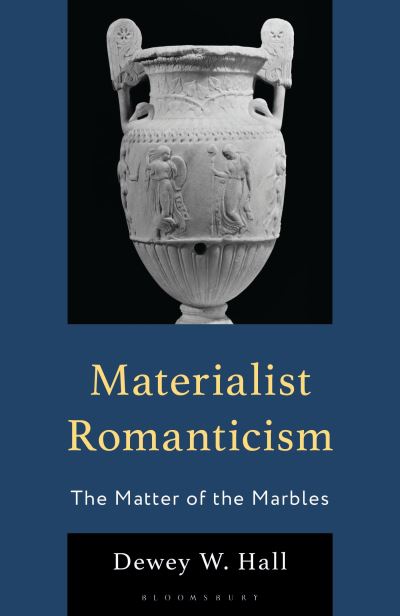
A matter-based approach to the study of nineteenth-century Romantic artifacts centering on the removal of the Parthenon sculptures from Athens, Greece by Thomas Bruce, the 7th Earl of Elgin, and sale of the prized artifacts to the British Parliament for £35,000 in 1816.
Dewey W. Hall delves into the intrigue surrounding the famed sculptures by reaching back in time to Democritus (460-370 B.C.), Aristotle (384-322 B.C.), and Epicurus (341-271 B.C.) who theorized about the atom-the basis for the materialist tradition-and Lucretius's notion of the swerve in De Rerum Natura (Of the Nature of Things) (c. 55-49 B.C.). This study includes various artistic responses to the Parthenon sculptures via the verbal and visual as represented through George Gordon, Lord Byron's Curse of Minerva (1811) and Childe Harold's Pilgrimage (1812), Benjamin Robert Haydon's sketches of the horse of Selene (1809) held at the British Museum, and John Keats's Endymion (1818) and "Ode on a Grecian Urn" (1819).
| ISBN: | 9781793635587 |
| Publication date: | 19th February 2026 |
| Author: | Dewey W Hall |
| Publisher: | Bloomsbury Academic an imprint of Bloomsbury Publishing (UK) |
| Format: | Hardback |
| Pagination: | 148 pages |
| Genres: |
Literature: history and criticism Literary studies: c 1800 to c 1900 |
A matter-based approach to the study of nineteenth-century Romantic artifacts centering on the removal of the Parthenon sculptures from Athens, Greece by Thomas Bruce, the 7th Earl of Elgin, and sale of the prized artifacts to the British Parliament for £35,000 in 1816.
Dewey W. Hall delves into the intrigue surrounding the famed sculptures by reaching back in time to Democritus (460-370 B.C.), Aristotle (384-322 B.C.), and Epicurus (341-271 B.C.) who theorized about the atom-the basis for the materialist tradition-and Lucretius's notion of the swerve in De Rerum Natura (Of the Nature of Things) (c. 55-49 B.C.). This study includes various artistic responses to the Parthenon sculptures via the verbal and visual as represented through George Gordon, Lord Byron's Curse of Minerva (1811) and Childe Harold's Pilgrimage (1812), Benjamin Robert Haydon's sketches of the horse of Selene (1809) held at the British Museum, and John Keats's Endymion (1818) and "Ode on a Grecian Urn" (1819).
Materialist Romanticism features in the following genres: Literature: history and criticism, Literary studies: c 1800 to c 1900
Materialist Romanticism is available in Hardback
Materialist Romanticism was written by Dewey W Hall and published by Bloomsbury Academic an imprint of Bloomsbury Publishing (UK)
Materialist Romanticism has 148 pages
£67.50