

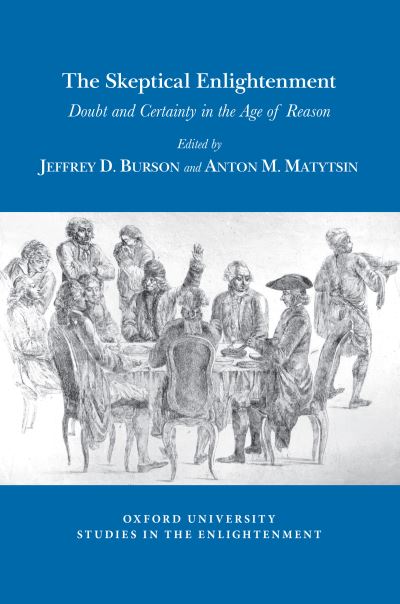
Although many historical narratives often describe the eighteenth century as an unalloyed 'Age of Reason', Enlightenment thinkers continued to grapple with the challenges posed by the revival and spread of philosophical skepticism. The imperative to overcome doubt and uncertainty informed some of the most innovative characteristics of eighteenth-century intellectual culture, including not only debates about epistemology and metaphysics but also matters of jurisprudence, theology, history, moral philosophy, and politics. Thinkers of this period debated about, established, and productively worked for progress within the parameters of the increasingly circumscribed boundaries of human reason. No longer considered innate and consistently perfect, reason instead became conceived as a faculty that was inherently fallible, limited by personal experiences, and in need of improvement throughout the course of any individual's life.
In its depiction of a complicated, variegated, and diverse Enlightenment culture, this volume examines the process by which philosophical skepticism was challenged and gradually tamed to bring about an anxious confidence in the powers of human understanding. The various contributions collectively demonstrate that philosophical skepticism, and not simply unshakable confidence in the powers of reason or the optimistic assumption about inevitable human improvement, was, in fact, the crucible of the Enlightenment process itself.
| ISBN: | 9781786941947 |
| Publication date: | 11th March 2019 |
| Author: | Jeffrey D Burson, Anton M Matytsin |
| Publisher: | Voltaire Foundation an imprint of Liverpool University Press |
| Format: | Paperback |
| Pagination: | 248 pages |
| Series: | Oxford University Studies in the Enlightenment |
| Genres: |
Western philosophy: Enlightenment Literary studies: c 1600 to c 1800 |
Although many historical narratives often describe the eighteenth century as an unalloyed 'Age of Reason', Enlightenment thinkers continued to grapple with the challenges posed by the revival and spread of philosophical skepticism. The imperative to overcome doubt and uncertainty informed some of the most innovative characteristics of eighteenth-century intellectual culture, including not only debates about epistemology and metaphysics but also matters of jurisprudence, theology, history, moral philosophy, and politics. Thinkers of this period debated about, established, and productively worked for progress within the parameters of the increasingly circumscribed boundaries of human reason. No longer considered innate and consistently perfect, reason instead became conceived as a faculty that was inherently fallible, limited by personal experiences, and in need of improvement throughout the course of any individual's life.
In its depiction of a complicated, variegated, and diverse Enlightenment culture, this volume examines the process by which philosophical skepticism was challenged and gradually tamed to bring about an anxious confidence in the powers of human understanding. The various contributions collectively demonstrate that philosophical skepticism, and not simply unshakable confidence in the powers of reason or the optimistic assumption about inevitable human improvement, was, in fact, the crucible of the Enlightenment process itself.
The Skeptical Enlightenment features in the following genres: Western philosophy: Enlightenment, Literary studies: c 1600 to c 1800
The Skeptical Enlightenment is available in Paperback
The Skeptical Enlightenment was written by Jeffrey D Burson, Anton M Matytsin and published by Voltaire Foundation an imprint of Liverpool University Press
The Skeptical Enlightenment has 248 pages
Yes it is part of Oxford University Studies in the Enlightenment series