

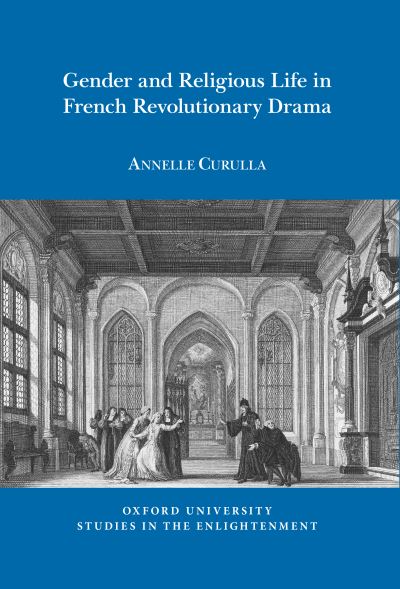
In the final decade of the eighteenth century, theatre was amongst the most important sites for redefining France's national identity. In this study, Annelle Curulla uses a range of archival material to show that, more than any other subject matter which was once forbidden from the French stage, Roman Catholic religious life provided a crucial trope for expressing theatre's patriotic mission after 1789.
Even as old rules and customs fell with the walls of the Bastille, dramatic works by Gouges, Chénier, La Harpe, and others depicted the cloister as a space for reimagining forms of familial, individual, and civic belonging and exclusion.
By relating the dramatic trope of religious life to shifting concepts of gender, family, religiosity, and nation, Curulla sheds light on how the process of secularization played out in the cultural space of French theatre.
| ISBN: | 9781786941404 |
| Publication date: | 13th November 2018 |
| Author: | Annelle Curulla |
| Publisher: | Voltaire Foundation an imprint of Liverpool University Press |
| Format: | Paperback |
| Pagination: | 216 pages |
| Series: | Oxford University Studies in the Enlightenment |
| Genres: |
Literary studies: c 1600 to c 1800 Gender studies, gender groups European history Literary studies: plays and playwrights Classic and pre-20th century plays Literary theory Religion and beliefs |
In the final decade of the eighteenth century, theatre was amongst the most important sites for redefining France's national identity. In this study, Annelle Curulla uses a range of archival material to show that, more than any other subject matter which was once forbidden from the French stage, Roman Catholic religious life provided a crucial trope for expressing theatre's patriotic mission after 1789.
Even as old rules and customs fell with the walls of the Bastille, dramatic works by Gouges, Chénier, La Harpe, and others depicted the cloister as a space for reimagining forms of familial, individual, and civic belonging and exclusion.
By relating the dramatic trope of religious life to shifting concepts of gender, family, religiosity, and nation, Curulla sheds light on how the process of secularization played out in the cultural space of French theatre.
Gender and Religious Life in French Revolutionary Drama features in the following genres: Literary studies: c 1600 to c 1800, Gender studies, gender groups, European history, Literary studies: plays and playwrights, Classic and pre-20th century plays, Literary theory, Religion and beliefs
Gender and Religious Life in French Revolutionary Drama is available in Paperback
Gender and Religious Life in French Revolutionary Drama was written by Annelle Curulla and published by Voltaire Foundation an imprint of Liverpool University Press
Gender and Religious Life in French Revolutionary Drama has 216 pages
Yes it is part of Oxford University Studies in the Enlightenment series