

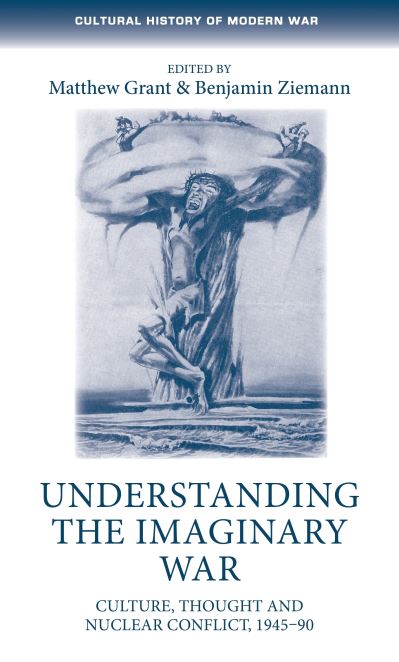
This collection offers a fresh interpretation of the Cold War as an imaginary war, a conflict that had imaginations of nuclear devastation as one of its main battlegrounds. The book includes survey chapters and case studies on Western Europe, the USSR, Japan and the USA. Looking at various strands of intellectual debate and at different media, from documentary film to fiction, the chapters demonstrate the difficulties to make the unthinkable and unimaginable - nuclear apocalypse - imaginable. The book will be required reading for everyone who wants to understand the cultural dynamics of the Cold War through the angle of its core ingredient, nuclear weapons.
| ISBN: | 9781784994402 |
| Publication date: | 17th August 2016 |
| Author: | Matthew Grant, Benjamin Ziemann |
| Publisher: | Manchester University Press |
| Format: | Hardback |
| Pagination: | 320 pages |
| Series: | Cultural History of Modern War |
| Genres: |
History Social and cultural history Cold wars and proxy conflicts Nuclear weapons |
This collection offers a fresh interpretation of the Cold War as an imaginary war, a conflict that had imaginations of nuclear devastation as one of its main battlegrounds. The book includes survey chapters and case studies on Western Europe, the USSR, Japan and the USA. Looking at various strands of intellectual debate and at different media, from documentary film to fiction, the chapters demonstrate the difficulties to make the unthinkable and unimaginable - nuclear apocalypse - imaginable. The book will be required reading for everyone who wants to understand the cultural dynamics of the Cold War through the angle of its core ingredient, nuclear weapons.
Understanding the Imaginary War features in the following genres: History, Social and cultural history, Cold wars and proxy conflicts, Nuclear weapons
Understanding the Imaginary War is available in Hardback
Understanding the Imaginary War was written by Matthew Grant, Benjamin Ziemann and published by Manchester University Press
Understanding the Imaginary War has 320 pages
Yes it is part of Cultural History of Modern War series