

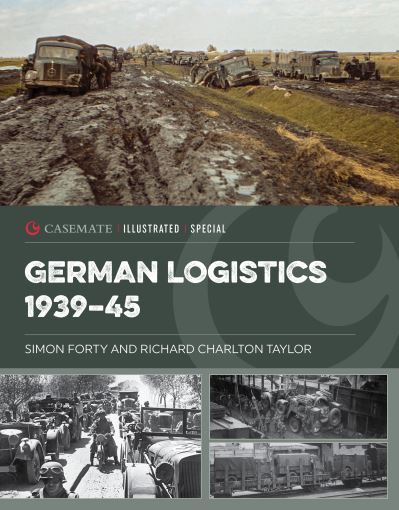
The successes of the Blitzkrieg campaigns of 1939-41 fostered an image of Germany's unstoppable modern military machine. Yet beneath the surface lay a critical vulnerability: logistics. Postwar narratives often point to overwhelming Soviet manpower, American industrial superiority, or Hitler's erratic leadership as causes of Germany's defeat. While these factors undoubtedly influenced the course of the war, the decisive factor in the Wehrmacht's failure was logistical inadequacy. Despite examples of resilience-advancing so far across the Russian steppe, maintaining industrial output under strategic Allied bombardment, and keeping the railways running-Germany's logistical system collapsed at key moments. In Moscow, troops froze without the winter gear that was stranded in depots. In North Africa, vital supplies failed to reach the front. At Stalingrad, air resupply proved impossible. In Normandy and the Ardennes, rail and fuel shortages proved fatal. Germany's success in the early war years hid the cracks in the system, and short-term wins came at a cost to its future. This fully illustrated volume examines the logistics of the Wehrmacht's largely horse-drawn supply system, its successes, and its ultimate failure. Casemate Illustrated Specials offer unparalleled detail into the weapons, equipment, and machinery of war. Detailed, focused text is accompanied by hundreds of photographs, illustrations, and diagrams, providing a wealth of visual information for the historian, modeler, or researcher.
| ISBN: | 9781636245188 |
| Publication date: | 31st October 2025 |
| Author: | Simon Forty, Richard Charlton Taylor |
| Publisher: | Casemate an imprint of Casemate Publishers |
| Format: | Hardback |
| Pagination: | 192 pages |
| Genres: |
Second World War Modern warfare Military and defence strategy War and defence operations |
The successes of the Blitzkrieg campaigns of 1939-41 fostered an image of Germany's unstoppable modern military machine. Yet beneath the surface lay a critical vulnerability: logistics. Postwar narratives often point to overwhelming Soviet manpower, American industrial superiority, or Hitler's erratic leadership as causes of Germany's defeat. While these factors undoubtedly influenced the course of the war, the decisive factor in the Wehrmacht's failure was logistical inadequacy. Despite examples of resilience-advancing so far across the Russian steppe, maintaining industrial output under strategic Allied bombardment, and keeping the railways running-Germany's logistical system collapsed at key moments. In Moscow, troops froze without the winter gear that was stranded in depots. In North Africa, vital supplies failed to reach the front. At Stalingrad, air resupply proved impossible. In Normandy and the Ardennes, rail and fuel shortages proved fatal. Germany's success in the early war years hid the cracks in the system, and short-term wins came at a cost to its future. This fully illustrated volume examines the logistics of the Wehrmacht's largely horse-drawn supply system, its successes, and its ultimate failure. Casemate Illustrated Specials offer unparalleled detail into the weapons, equipment, and machinery of war. Detailed, focused text is accompanied by hundreds of photographs, illustrations, and diagrams, providing a wealth of visual information for the historian, modeler, or researcher.
German Logistics 1939-45 features in the following genres: Second World War, Modern warfare, Military and defence strategy, War and defence operations
German Logistics 1939-45 is available in Hardback
German Logistics 1939-45 was written by Simon Forty, Richard Charlton Taylor and published by Casemate an imprint of Casemate Publishers
German Logistics 1939-45 has 192 pages
£31.46