

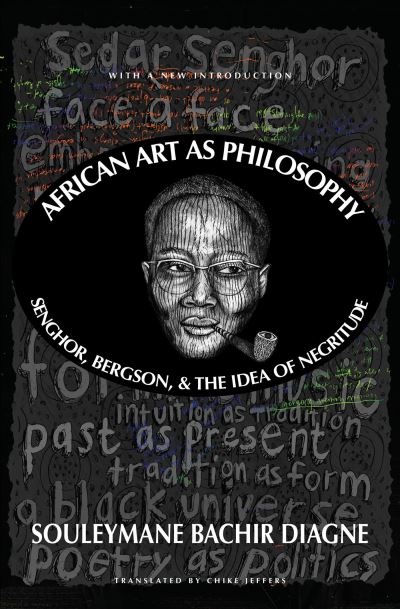
This critically acclaimed study offers a distinct, incisive look at how Senegalese philosopher Senghor sees in African art the most acute expression of Bergson's philosophy.
Léopold Sédar Senghor (1906-2001) was a Senegalese poet and philosopher who in 1960 also became the first president of the Republic of Senegal. In African Art as Philosophy, Souleymane Bachir Diagne uses a unique approach to reading Senghor's influential works, taking as the starting point for his analysis Henri Bergson's idea that in order to understand philosophers, one must find the initial intuition from which every aspect of their work develops. In the case of Senghor, Diagne argues that his primordial intuition is that African art is a philosophy.
To further this point, Diagne looks at what Senghor called the "1889 Revolution" (the year Bergson's Time and Free Will was published), as well as the influential writers and publications of that period-specifically, Nietzsche and Rimbaud. The 1889 Revolution, Senghor claims, is what led him to the understanding of the "Vitalism" at the core of African religions and beliefs that found expression in the arts.
| ISBN: | 9781635423211 |
| Publication date: | 5th September 2023 |
| Author: | Souleymane Bachir Diagne |
| Publisher: | Other an imprint of Other Press |
| Format: | Paperback |
| Pagination: | 208 pages |
| Genres: |
History of art Biography: philosophy and social sciences Ethnic studies Philosophy |
This critically acclaimed study offers a distinct, incisive look at how Senegalese philosopher Senghor sees in African art the most acute expression of Bergson's philosophy.
Léopold Sédar Senghor (1906-2001) was a Senegalese poet and philosopher who in 1960 also became the first president of the Republic of Senegal. In African Art as Philosophy, Souleymane Bachir Diagne uses a unique approach to reading Senghor's influential works, taking as the starting point for his analysis Henri Bergson's idea that in order to understand philosophers, one must find the initial intuition from which every aspect of their work develops. In the case of Senghor, Diagne argues that his primordial intuition is that African art is a philosophy.
To further this point, Diagne looks at what Senghor called the "1889 Revolution" (the year Bergson's Time and Free Will was published), as well as the influential writers and publications of that period-specifically, Nietzsche and Rimbaud. The 1889 Revolution, Senghor claims, is what led him to the understanding of the "Vitalism" at the core of African religions and beliefs that found expression in the arts.
African Art as Philosophy features in the following genres: History of art, Biography: philosophy and social sciences, Ethnic studies, Philosophy
African Art as Philosophy is available in Paperback, Hardback
African Art as Philosophy was written by Souleymane Bachir Diagne and published by Other an imprint of Other Press
African Art as Philosophy has 208 pages
£15.29