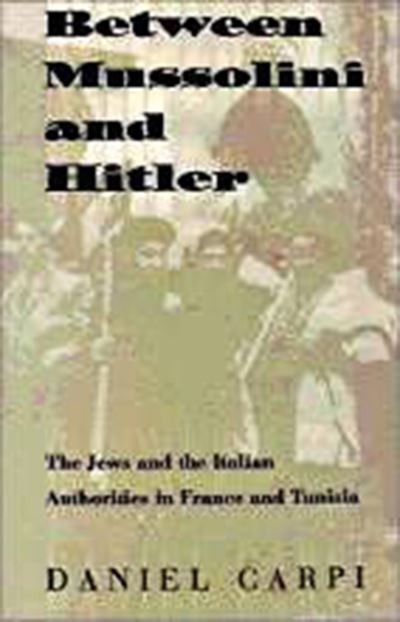
The Nazi invasion of Poland in 1939 plunged the world into its second global conflict. The Third Reich's attack, mounted without consulting its Italian ally, had other reverberations as well. Chief among them was Mussolini's decision to conduct a "parallel war" based on his own tactical and political agendas. Against this backdrop, Daniel Carpi depicts the fate of some 5000 Jews in Tunisia and as many as 30,000 in southeastern France, all of whom came under the aegis of the Italian Fascist regime early in the war. Many were unskilled immigrants: still others were political refugees, activists, or anti-fascist emigres, the fuoriusciti who fled oppression in Italy only to find themselves under its rule once again after the fall of France. While the Fascist regime disagreed with Hitler's final solution for the "Jewish problem," it also saw actions by Vichy French police or German security forces against Jews in Italian-controlled regions as an erosion of Rome's power. Thus, although these Jews were not free from oppression, Carpi shows that as long as Italy maintained control over them its consular officials were able to block the arrests and mass deportations occurring elsewhere.
Buy from our bookstore and 25% of the cover price will be given to a school of your choice to buy more books. *15% of eBooks.
Frequently asked questions
The Nazi invasion of Poland in 1939 plunged the world into its second global conflict. The Third Reich's attack, mounted without consulting its Italian ally, had other reverberations as well. Chief among them was Mussolini's decision to conduct a "parallel war" based on his own tactical and political agendas. Against this backdrop, Daniel Carpi depicts the fate of some 5000 Jews in Tunisia and as many as 30,000 in southeastern France, all of whom came under the aegis of the Italian Fascist regime early in the war. Many were unskilled immigrants: still others were political refugees, activists, or anti-fascist emigres, the fuoriusciti who fled oppression in Italy only to find themselves under its rule once again after the fall of France. While the Fascist regime disagreed with Hitler's final solution for the "Jewish problem," it also saw actions by Vichy French police or German security forces against Jews in Italian-controlled regions as an erosion of Rome's power. Thus, although these Jews were not free from oppression, Carpi shows that as long as Italy maintained control over them its consular officials were able to block the arrests and mass deportations occurring elsewhere.
Between Mussolini and Hitler features in the following genres: Social groups: religious groups and communities
Between Mussolini and Hitler is available in Paperback
Between Mussolini and Hitler was written by Daniel Carpi and published by Brandeis University Press
Join our community for the latest bookish news, reading recommendations, exclusive opening extracts, author events and competitions. It\'s all free. And enter a monthly draw to win a £50 Gift Card. See past winners here