

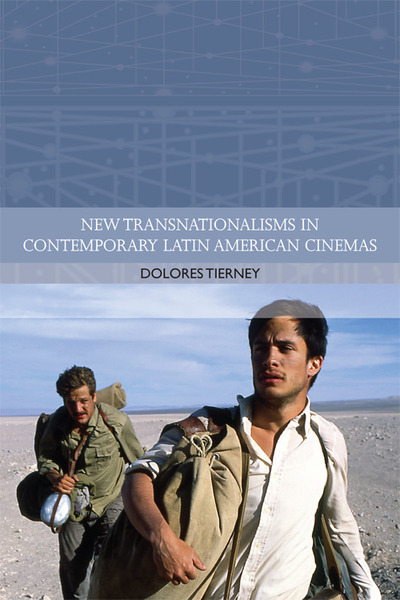
In the late 1990s and early 2000s Latin American films like Amores perros, Y tu mamá también and Cidade de Deus enjoyed an unprecedented level of critical and commercial success in the world market. Benefitting from external financial and/or creative input, these films were considered examples of transnational cinema. Through a textual analysis of six filmmakers (Alejandro González Iñárritu, Alfonso Cuarón, Guillermo del Toro, Fernando Meirelles, Walter Salles and Juan José Campanella), this book examines these transnational films and the subsequent wave of commercially successful 'deterritorialised' films by the same directors. It argues that although films produced within the structures of the United States film industry may have been commercially successful, they are not necessarily apolitical or totally divorced from key notions of national or continental identity. Bringing a new perspective to the films of Latin America's transnational auteurs, this is a major contribution towards understanding how different genres function across different cultures.
| ISBN: | 9781474431132 |
| Publication date: | 31st December 2019 |
| Author: | Dolores Tierney |
| Publisher: | Edinburgh University Press |
| Format: | Paperback |
| Pagination: | 296 pages |
| Series: | Traditions in World Cinema |
| Genres: |
Film: styles and genres Filmmaking and production: technical and background skills Film history, theory or criticism Films, cinema Regional / International studies |
In the late 1990s and early 2000s Latin American films like Amores perros, Y tu mamá también and Cidade de Deus enjoyed an unprecedented level of critical and commercial success in the world market. Benefitting from external financial and/or creative input, these films were considered examples of transnational cinema. Through a textual analysis of six filmmakers (Alejandro González Iñárritu, Alfonso Cuarón, Guillermo del Toro, Fernando Meirelles, Walter Salles and Juan José Campanella), this book examines these transnational films and the subsequent wave of commercially successful 'deterritorialised' films by the same directors. It argues that although films produced within the structures of the United States film industry may have been commercially successful, they are not necessarily apolitical or totally divorced from key notions of national or continental identity. Bringing a new perspective to the films of Latin America's transnational auteurs, this is a major contribution towards understanding how different genres function across different cultures.
Contemporary Latin American Cinema features in the following genres: Film: styles and genres, Filmmaking and production: technical and background skills, Film history, theory or criticism, Films, cinema, Regional / International studies
Contemporary Latin American Cinema is available in Paperback, Hardback
Contemporary Latin American Cinema was written by Dolores Tierney and published by Edinburgh University Press
Contemporary Latin American Cinema has 296 pages
Yes it is part of Traditions in World Cinema series
£23.39