

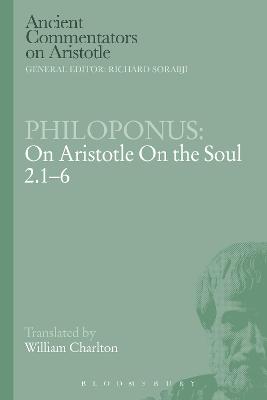
In On The Soul 2.1-6, Aristotle differs from Plato in his account of the soul, by tying it to the body. The soul is the life-manifesting capacities that we all have and that distinguish living things, and explain their behaviour. He defines soul and life by reference to the capacities for using food to maintain structure and reproduce, for perceiving and desiring, and for rational thought. Capacities have to be defined by reference to the objects to which they are directed. The five senses, for example, are defined by reference to their objects which are primarily forms like colour. And in perception we are said to receive these forms without matter. Philoponus understands this reception not physiologically as the eye jelly's taking on colour patches, but 'cognitively', like Brentano, who much later thought that Aristotle was treating the forms as intentional objects. Philoponus is the patron of non-physiological interpretations, which are still a matter of controversy today.
| ISBN: | 9781472557728 |
| Publication date: | 10th April 2014 |
| Author: | Philoponus |
| Publisher: | Bloomsbury Academic an imprint of Bloomsbury Publishing PLC |
| Format: | Paperback |
| Pagination: | 192 pages |
| Series: | Ancient Commentators on Aristotle |
| Genres: |
Ancient Greek and Roman philosophy |
In On The Soul 2.1-6, Aristotle differs from Plato in his account of the soul, by tying it to the body. The soul is the life-manifesting capacities that we all have and that distinguish living things, and explain their behaviour. He defines soul and life by reference to the capacities for using food to maintain structure and reproduce, for perceiving and desiring, and for rational thought. Capacities have to be defined by reference to the objects to which they are directed. The five senses, for example, are defined by reference to their objects which are primarily forms like colour. And in perception we are said to receive these forms without matter. Philoponus understands this reception not physiologically as the eye jelly's taking on colour patches, but 'cognitively', like Brentano, who much later thought that Aristotle was treating the forms as intentional objects. Philoponus is the patron of non-physiological interpretations, which are still a matter of controversy today.
Philoponus: On Aristotle On the Soul 2.1-6 features in the following genres: Ancient Greek and Roman philosophy
Philoponus: On Aristotle On the Soul 2.1-6 is available in Paperback
Philoponus: On Aristotle On the Soul 2.1-6 was written by Philoponus and published by Bloomsbury Academic an imprint of Bloomsbury Publishing PLC
Philoponus: On Aristotle On the Soul 2.1-6 has 192 pages
Yes it is part of Ancient Commentators on Aristotle series