

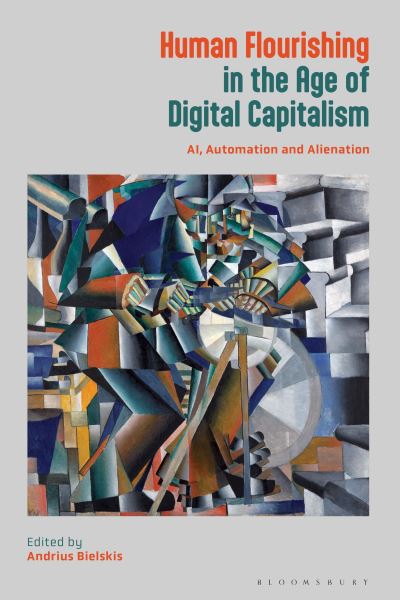
With a distinctive theoretical framework combining Aristotle, Marx, and Alasdair MacIntyre, the essays in this volume ask how forms of artificial intelligence and technologies of automation in digital capitalism affect human flourishing, and what meaningful work looks like under these conditions.
As technology advances, how do we decide what activities should be automated? Is the end of work through automation actually desirable? If a good life is the life of activity employing our rational, imaginative, and creative powers, what does it mean to say that future societies will be post-work societies? Rather than simply embracing the possibilities of automation to eliminate work, this collection considers that meaningful work is integral to the good life.
Human Flourishing in the Age of Digital Capitalism contains eight essays from scholars in the UK, Europe and USA, reflecting on the philosophical and ethical dimensions of technology and political theory. Contributions cover topics such as algorithmic management, the feared 'superintelligence' of machines, the concept of good work, and the alienating consequences of technology for workers. This timely and novel intervention in the automation debate will be of interest to anyone considering new technologies from the perspective of normative ethics and the critique of political economy.
| ISBN: | 9781350510722 |
| Publication date: | 15th May 2025 |
| Author: | Andrius Bielskis |
| Publisher: | Bloomsbury Academic an imprint of Bloomsbury Publishing (UK) |
| Format: | Hardback |
| Pagination: | 232 pages |
| Genres: |
Ethics and moral philosophy Social and political philosophy Political science and theory |
With a distinctive theoretical framework combining Aristotle, Marx, and Alasdair MacIntyre, the essays in this volume ask how forms of artificial intelligence and technologies of automation in digital capitalism affect human flourishing, and what meaningful work looks like under these conditions.
As technology advances, how do we decide what activities should be automated? Is the end of work through automation actually desirable? If a good life is the life of activity employing our rational, imaginative, and creative powers, what does it mean to say that future societies will be post-work societies? Rather than simply embracing the possibilities of automation to eliminate work, this collection considers that meaningful work is integral to the good life.
Human Flourishing in the Age of Digital Capitalism contains eight essays from scholars in the UK, Europe and USA, reflecting on the philosophical and ethical dimensions of technology and political theory. Contributions cover topics such as algorithmic management, the feared 'superintelligence' of machines, the concept of good work, and the alienating consequences of technology for workers. This timely and novel intervention in the automation debate will be of interest to anyone considering new technologies from the perspective of normative ethics and the critique of political economy.
Human Flourishing in the Age of Digital Capitalism features in the following genres: Ethics and moral philosophy, Social and political philosophy, Political science and theory
Human Flourishing in the Age of Digital Capitalism is available in Paperback, Hardback
Human Flourishing in the Age of Digital Capitalism was written by Andrius Bielskis and published by Bloomsbury Academic an imprint of Bloomsbury Publishing (UK)
Human Flourishing in the Age of Digital Capitalism has 232 pages
£49.50