

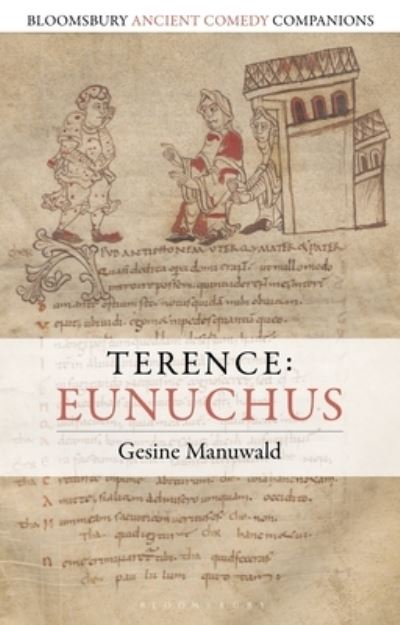
Terence's Eunuchus (first shown on stage in the second century BCE) was extremely successful at its first performance and has been influential ever since, having inspired allusions and remakes by writers and artists from the ancient world into the modern period. This success may be partly due to the fact that the play has a number of 'Plautine' elements, such as effective comedy and dramaturgy. At the same time, the piece includes actions that are ethically problematic at least from the point of view of a modern audience, especially the reported rape of a young woman. Thus, this drama is an intriguing example of how a comedy can present attractive entertainment and raise serious issues, both of which contribute to the continuing fascination that Terence's Eunuchus evokes.
Gesine Manuwald analyses the Eunuchus in its transmitted form as a piece of Roman Republican dramatic literature, looking at: the playwright's role within the Roman comic tradition and his engagement with contemporary dramatists; the structure and effectiveness of the plot as well as the characterization of the protagonists and the comedy's themes; and the extent to which these might have resonated with a contemporary audience. On this basis, aspects of the history of the play's reception can be traced, starting in the ancient world, including the late-antique commentary on the play by Donatus, illustrations in early manuscripts as well as literary and artistic reflections in the early modern and modern periods.
| ISBN: | 9781350344051 |
| Publication date: | 14th May 2026 |
| Author: | Dr Gesine Manuwald |
| Publisher: | Bloomsbury Academic an imprint of Bloomsbury Publishing (UK) |
| Format: | Hardback |
| Pagination: | 160 pages |
| Series: | Bloomsbury Ancient Comedy Companions |
| Genres: |
Ancient, classical and medieval texts Comedic plays Literary studies: plays and playwrights |
Terence's Eunuchus (first shown on stage in the second century BCE) was extremely successful at its first performance and has been influential ever since, having inspired allusions and remakes by writers and artists from the ancient world into the modern period. This success may be partly due to the fact that the play has a number of 'Plautine' elements, such as effective comedy and dramaturgy. At the same time, the piece includes actions that are ethically problematic at least from the point of view of a modern audience, especially the reported rape of a young woman. Thus, this drama is an intriguing example of how a comedy can present attractive entertainment and raise serious issues, both of which contribute to the continuing fascination that Terence's Eunuchus evokes.
Gesine Manuwald analyses the Eunuchus in its transmitted form as a piece of Roman Republican dramatic literature, looking at: the playwright's role within the Roman comic tradition and his engagement with contemporary dramatists; the structure and effectiveness of the plot as well as the characterization of the protagonists and the comedy's themes; and the extent to which these might have resonated with a contemporary audience. On this basis, aspects of the history of the play's reception can be traced, starting in the ancient world, including the late-antique commentary on the play by Donatus, illustrations in early manuscripts as well as literary and artistic reflections in the early modern and modern periods.
Terence features in the following genres: Ancient, classical and medieval texts, Comedic plays, Literary studies: plays and playwrights
Terence is available in Hardback
Terence was written by Dr Gesine Manuwald and published by Bloomsbury Academic an imprint of Bloomsbury Publishing (UK)
Terence has 160 pages
Yes it is part of Bloomsbury Ancient Comedy Companions series
£63.00