

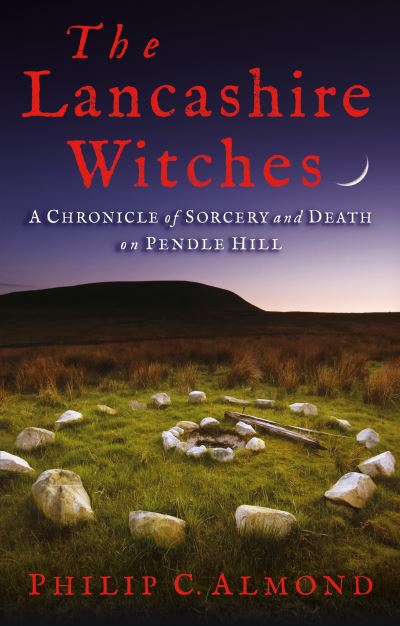
In the febrile religious and political climate of late sixteenth-century England, when the grip of the Reformation was as yet fragile and insecure, and underground papism still perceived to be rife, Lancashire was felt by the Protestant authorities to be a sinister corner of superstition, lawlessness and popery. And it was around Pendle Hill, a sombre ridge that looms over the intersecting pastures, meadows and moorland of the Ribble Valley, that their suspicions took infamous shape. The arraignment of the Lancashire witches in the assizes of Lancaster during 1612 is England's most notorious witch-trial. The women who lived in the vicinity of Pendle, who were accused alongside the so-called Samlesbury Witches, then convicted and hanged, were more than just wicked sorcerers whose malign incantations caused others harm. They were reputed to be part of a dense network of devilry and mischief that revealed itself as much in hidden celebration of the Mass as in malevolent magic. They had to be eliminated to set an example to others.
In this remarkable and authoritative treatment, published to coincide with the 400th anniversary of the case of the Lancashire witches, Philip C Almond evokes all the fear, drama and paranoia of those volatile times: the bleak story of the storm over Pendle
| ISBN: | 9781350239913 |
| Publication date: | 12th November 2020 |
| Author: | Philip C Almond |
| Publisher: | Bloomsbury Academic an imprint of Bloomsbury Publishing (UK) |
| Format: | Paperback |
| Pagination: | 256 pages |
| Genres: |
European history Blasphemy, heresy, apostasy Witchcraft History of ideas Sociology: death and dying Witchcraft and wicca Local history Regional / International studies History and Archaeology |
In the febrile religious and political climate of late sixteenth-century England, when the grip of the Reformation was as yet fragile and insecure, and underground papism still perceived to be rife, Lancashire was felt by the Protestant authorities to be a sinister corner of superstition, lawlessness and popery. And it was around Pendle Hill, a sombre ridge that looms over the intersecting pastures, meadows and moorland of the Ribble Valley, that their suspicions took infamous shape. The arraignment of the Lancashire witches in the assizes of Lancaster during 1612 is England's most notorious witch-trial. The women who lived in the vicinity of Pendle, who were accused alongside the so-called Samlesbury Witches, then convicted and hanged, were more than just wicked sorcerers whose malign incantations caused others harm. They were reputed to be part of a dense network of devilry and mischief that revealed itself as much in hidden celebration of the Mass as in malevolent magic. They had to be eliminated to set an example to others.
In this remarkable and authoritative treatment, published to coincide with the 400th anniversary of the case of the Lancashire witches, Philip C Almond evokes all the fear, drama and paranoia of those volatile times: the bleak story of the storm over Pendle
The Lancashire Witches features in the following genres: European history, Blasphemy, heresy, apostasy, Witchcraft, History of ideas, Sociology: death and dying, Witchcraft and wicca, Local history, Regional / International studies, History and Archaeology
The Lancashire Witches is available in Paperback
The Lancashire Witches was written by Philip C Almond and published by Bloomsbury Academic an imprint of Bloomsbury Publishing (UK)
The Lancashire Witches has 256 pages
£15.29