

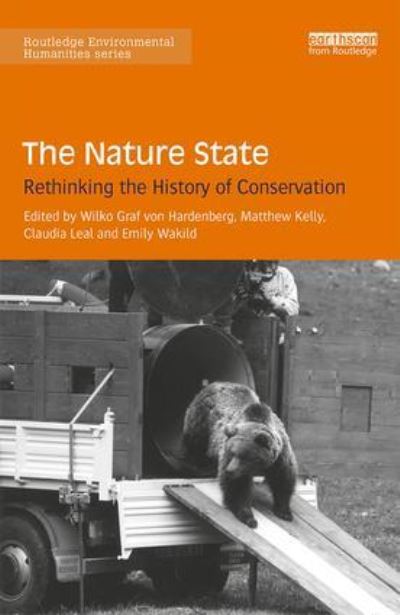
This volume brings together case studies from around the globe (including China, Latin America, the Philippines, Namibia, India and Europe) to explore the history of nature conservation in the twentieth century. It seeks to highlight the state, a central actor in these efforts, which is often taken for granted, and establishes a novel concept - the nature state - as a means for exploring the historical formation of that portion of the state dedicated to managing and protecting nature.
Following the Industrial Revolution and post-war exponential increase in human population and consumption, conservation in myriad forms has been one particularly visible way in which the government and its agencies have tried to control, manage or produce nature for reasons other than raw exploitation. Using an interdisciplinary approach and including case studies from across the globe, this edited collection brings together geographers, sociologists, anthropologists and historians in order to examine the degree to which sociopolitical regimes facilitate and shape the emergence and development of nature states.
This innovative work marks an early intervention in the tentative turn towards the state in environmental history and will be of great interest to students and practitioners of environmental history, social anthropology and conservation studies.
| ISBN: | 9781138719040 |
| Publication date: | 12th June 2017 |
| Author: | Wilko Graf von Hardenberg, Matthew Kelly, Claudia Leal, Emily Wakild |
| Publisher: | Routledge an imprint of Taylor & Francis |
| Format: | Hardback |
| Pagination: | 244 pages |
| Series: | Routledge Environmental Humanities |
| Genres: |
Development studies Environmental economics Human geography Environmental policy and protocols Social impact of environmental issues Agricultural science History Politics and government |
This volume brings together case studies from around the globe (including China, Latin America, the Philippines, Namibia, India and Europe) to explore the history of nature conservation in the twentieth century. It seeks to highlight the state, a central actor in these efforts, which is often taken for granted, and establishes a novel concept - the nature state - as a means for exploring the historical formation of that portion of the state dedicated to managing and protecting nature.
Following the Industrial Revolution and post-war exponential increase in human population and consumption, conservation in myriad forms has been one particularly visible way in which the government and its agencies have tried to control, manage or produce nature for reasons other than raw exploitation. Using an interdisciplinary approach and including case studies from across the globe, this edited collection brings together geographers, sociologists, anthropologists and historians in order to examine the degree to which sociopolitical regimes facilitate and shape the emergence and development of nature states.
This innovative work marks an early intervention in the tentative turn towards the state in environmental history and will be of great interest to students and practitioners of environmental history, social anthropology and conservation studies.
The Nature State features in the following genres: Development studies, Environmental economics, Human geography, Environmental policy and protocols, Social impact of environmental issues, Agricultural science, History, Politics and government
The Nature State is available in Hardback
The Nature State was written by Wilko Graf von Hardenberg, Matthew Kelly, Claudia Leal, Emily Wakild and published by Routledge an imprint of Taylor & Francis
The Nature State has 244 pages
Yes it is part of Routledge Environmental Humanities series
£154.79