

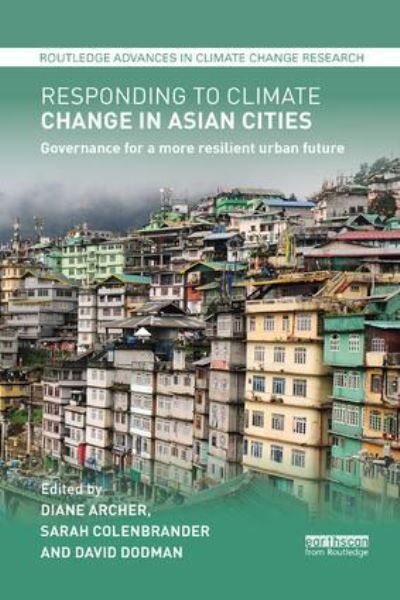
The role of cities in addressing climate change is increasingly recognised in international arenas, including the Sustainable Development Goals, the UN Framework Convention on Climate Change, and the New Urban Agenda. Asia is home to many of the countries that are most vulnerable to climate change impacts and, along with Africa, will be the site of most urban population growth over the coming decades.
Bringing together a range of city experiences, Responding to Climate Change in Asian Cities provides valuable insights into how cities can overcome some of the barriers to building climate resilience, including addressing the needs of vulnerable populations. The chapters are centred on an overarching understanding that adaptive urban governance is necessary for climate resilience. This requires engaging with different actors to take into account their experiences, vulnerabilities and priorities; building knowledge, including collecting and using appropriate evidence; and understanding the institutions shaping interactions between actors, from the national to the local level.
The chapters draw on a mix of research methodologies, demonstrating the variety of approaches to understanding and building urban resilience that can be applied in urban settings. Bringing together a range of expert contributors, this book will be of great interest to scholars of urban studies, sustainability and environmental studies, development studies and Asian studies.
| ISBN: | 9781138393448 |
| Publication date: | 27th September 2018 |
| Author: | Diane Archer, Sarah Colenbrander, David Dodman |
| Publisher: | Routledge an imprint of Taylor & Francis |
| Format: | Paperback |
| Pagination: | 222 pages |
| Series: | Routledge Advances in Climate Change Research |
| Genres: |
Climate change Urban communities Urban and municipal planning and policy Regional / International studies Development studies |
The role of cities in addressing climate change is increasingly recognised in international arenas, including the Sustainable Development Goals, the UN Framework Convention on Climate Change, and the New Urban Agenda. Asia is home to many of the countries that are most vulnerable to climate change impacts and, along with Africa, will be the site of most urban population growth over the coming decades.
Bringing together a range of city experiences, Responding to Climate Change in Asian Cities provides valuable insights into how cities can overcome some of the barriers to building climate resilience, including addressing the needs of vulnerable populations. The chapters are centred on an overarching understanding that adaptive urban governance is necessary for climate resilience. This requires engaging with different actors to take into account their experiences, vulnerabilities and priorities; building knowledge, including collecting and using appropriate evidence; and understanding the institutions shaping interactions between actors, from the national to the local level.
The chapters draw on a mix of research methodologies, demonstrating the variety of approaches to understanding and building urban resilience that can be applied in urban settings. Bringing together a range of expert contributors, this book will be of great interest to scholars of urban studies, sustainability and environmental studies, development studies and Asian studies.
Responding to Climate Change in Asian Cities features in the following genres: Climate change, Urban communities, Urban and municipal planning and policy, Regional / International studies, Development studies
Responding to Climate Change in Asian Cities is available in Paperback
Responding to Climate Change in Asian Cities was written by Diane Archer, Sarah Colenbrander, David Dodman and published by Routledge an imprint of Taylor & Francis
Responding to Climate Change in Asian Cities has 222 pages
Yes it is part of Routledge Advances in Climate Change Research series
£44.09