

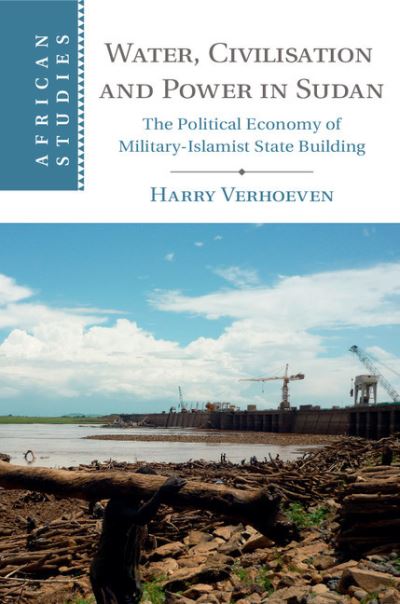
In 1989, a secretive movement of Islamists allied itself to a military cabal to violently take power in Africa's biggest country. Sudan's revolutionary regime was built on four pillars - a new politics, economic liberalisation, an Islamic revival, and a U-turn in foreign relations - and mixed militant conservatism with social engineering: a vision of authoritarian modernisation. Water and agricultural policy have been central to this state-building project. Going beyond the conventional lenses of famine, 'water wars' or the oil resource curse, Harry Verhoeven links environmental factors, development, and political power. Based on years of unique access to the Islamists, generals, and business elites at the core of the Al-Ingaz Revolution, Verhoeven tells the story of one of Africa's most ambitious state-building projects in the modern era - and how its gamble to instrumentalise water and agriculture to consolidate power is linked to twenty-first-century globalisation, Islamist ideology, and intensifying geopolitics of the Nile.
| ISBN: | 9781107061149 |
| Publication date: | 3rd May 2015 |
| Author: | Harry Verhoeven |
| Publisher: | Cambridge University Press |
| Format: | Hardback |
| Pagination: | 336 pages |
| Series: | African Studies |
| Genres: |
Political structure and processes |
In 1989, a secretive movement of Islamists allied itself to a military cabal to violently take power in Africa's biggest country. Sudan's revolutionary regime was built on four pillars - a new politics, economic liberalisation, an Islamic revival, and a U-turn in foreign relations - and mixed militant conservatism with social engineering: a vision of authoritarian modernisation. Water and agricultural policy have been central to this state-building project. Going beyond the conventional lenses of famine, 'water wars' or the oil resource curse, Harry Verhoeven links environmental factors, development, and political power. Based on years of unique access to the Islamists, generals, and business elites at the core of the Al-Ingaz Revolution, Verhoeven tells the story of one of Africa's most ambitious state-building projects in the modern era - and how its gamble to instrumentalise water and agriculture to consolidate power is linked to twenty-first-century globalisation, Islamist ideology, and intensifying geopolitics of the Nile.
Water, Civilization and Power in Sudan features in the following genres: Political structure and processes, Public administration, Central / national / federal government, Regional, state and other local government, International relations, Environmental management, Social impact of environmental issues, Sustainability
Water, Civilization and Power in Sudan is available in Hardback
Water, Civilization and Power in Sudan was written by Harry Verhoeven and published by Cambridge University Press
Water, Civilization and Power in Sudan has 336 pages
Yes it is part of African Studies series
£89.10