

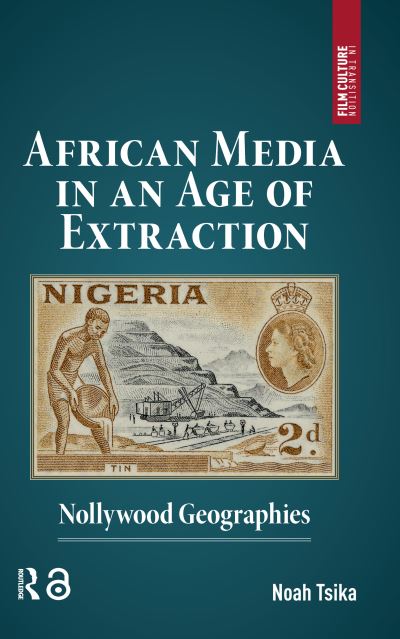
African Media in an Age of Extraction takes a fresh, site-specific look at the relationship between moving images and the mining of natural resources, arguing that where we "place" Nollywood and other industries has important practical and conceptual consequences. Such locations are not just spatial metaphors but also tangible geographies with material connections to extractive economies. Sites of film production are often spaces of oil prospecting, timber harvesting, and mineral extraction-natural environments continuously transformed by capital. African Media in an Age of Extraction links such absolute spaces-reclaimed lands, razed forests, petroleum zones, abandoned coal mines collecting moss, vast tin fields inspiring illegal dredging by populations locked out of the licit economy-to the abstract and lived dimensions of film villages, shooting locations, and exhibition centers. The geographies of African media industries are not fixed locations cleanly separated from surrounding areas or from the wider world (including Hollywood), nor are they fully detachable from the mineral and hydrocarbon resources that also define them. Considering multiple scales-the local, the national, the regional, the continental, the planetary-this book takes stock of the physical terrain and extractive objects that Nollywood shares with other industries and that structure screen media more broadly. Topographies, political economies, national identities, and natural resources are entwined in ways that cinema makes intelligible and that carry the potential to transform the way we see the medium itself.
| ISBN: | 9781041175339 |
| Publication date: | 10th June 2026 |
| Author: | Noah Tsika |
| Publisher: | Routledge an imprint of Taylor & Francis |
| Format: | Paperback |
| Pagination: | 360 pages |
| Series: | Film Culture in Transition |
| Genres: |
Film history, theory or criticism Media studies Extractive industries |
African Media in an Age of Extraction takes a fresh, site-specific look at the relationship between moving images and the mining of natural resources, arguing that where we "place" Nollywood and other industries has important practical and conceptual consequences. Such locations are not just spatial metaphors but also tangible geographies with material connections to extractive economies. Sites of film production are often spaces of oil prospecting, timber harvesting, and mineral extraction-natural environments continuously transformed by capital. African Media in an Age of Extraction links such absolute spaces-reclaimed lands, razed forests, petroleum zones, abandoned coal mines collecting moss, vast tin fields inspiring illegal dredging by populations locked out of the licit economy-to the abstract and lived dimensions of film villages, shooting locations, and exhibition centers. The geographies of African media industries are not fixed locations cleanly separated from surrounding areas or from the wider world (including Hollywood), nor are they fully detachable from the mineral and hydrocarbon resources that also define them. Considering multiple scales-the local, the national, the regional, the continental, the planetary-this book takes stock of the physical terrain and extractive objects that Nollywood shares with other industries and that structure screen media more broadly. Topographies, political economies, national identities, and natural resources are entwined in ways that cinema makes intelligible and that carry the potential to transform the way we see the medium itself.
African Media in an Age of Extraction features in the following genres: Films, cinema, Media studies
African Media in an Age of Extraction is available in Paperback, Hardback
African Media in an Age of Extraction was written by Noah Tsika and published by Routledge an imprint of Taylor & Francis
African Media in an Age of Extraction has 360 pages
Yes it is part of Film Culture in Transition series
£43.19