

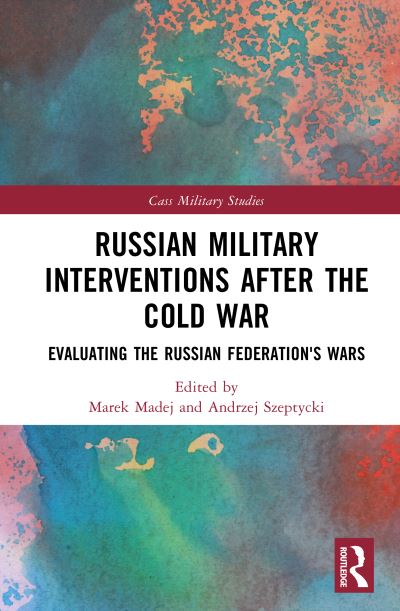
This book examines the Russian Federation's military interventions in the post-Cold War era.
The work connects key events - the Chechen and Georgian Wars, the annexation of Crimea, the Syrian intervention and the full-scale invasion of Ukraine - in a coherent narrative, showing how these conflicts grew out of Russia's authoritarian turn, aggressive nationalism, imperial ambitions and willingness to challenge the Western led international order. The book not only describes Russia's post-Cold War military operations, but also analyses them to understand how Russia makes war. As such, the book consists of two distinctive but interlinked parts. The first part comprises case studies of the major armed conflicts Russia has been involved in since 1994. The second offers "macro-scale" analyses of various aspects of Russian policies and practices concerning the use of force during the post-Cold War period, including the evolution of Russian military strategies and tactics, their impact on the international legal order, and Russian attitudes towards humanitarian principles and human rights norms during armed conflicts. By focusing not only on battlefield outcomes but also on legality, human suffering, state propaganda and changes in international norms, this volume offers a diverse and comprehensive view of Russian military practices in the post-Cold War period.
This book will be of much interest to students of Russian foreign policy, military studies, law, security studies and International Relations.
| ISBN: | 9781041072966 |
| Publication date: | 28th August 2026 |
| Author: | Marek Madej, Andrzej Szeptycki |
| Publisher: | Routledge an imprint of Taylor & Francis |
| Format: | Hardback |
| Pagination: | 312 pages |
| Series: | Cass Military Studies |
| Genres: |
Theory of warfare and military science Military and defence strategy International relations |
This book examines the Russian Federation's military interventions in the post-Cold War era.
The work connects key events - the Chechen and Georgian Wars, the annexation of Crimea, the Syrian intervention and the full-scale invasion of Ukraine - in a coherent narrative, showing how these conflicts grew out of Russia's authoritarian turn, aggressive nationalism, imperial ambitions and willingness to challenge the Western led international order. The book not only describes Russia's post-Cold War military operations, but also analyses them to understand how Russia makes war. As such, the book consists of two distinctive but interlinked parts. The first part comprises case studies of the major armed conflicts Russia has been involved in since 1994. The second offers "macro-scale" analyses of various aspects of Russian policies and practices concerning the use of force during the post-Cold War period, including the evolution of Russian military strategies and tactics, their impact on the international legal order, and Russian attitudes towards humanitarian principles and human rights norms during armed conflicts. By focusing not only on battlefield outcomes but also on legality, human suffering, state propaganda and changes in international norms, this volume offers a diverse and comprehensive view of Russian military practices in the post-Cold War period.
This book will be of much interest to students of Russian foreign policy, military studies, law, security studies and International Relations.
Russian Military Interventions After the Cold War features in the following genres: Theory of warfare and military science, Military and defence strategy, International relations
Russian Military Interventions After the Cold War is available in Hardback
Russian Military Interventions After the Cold War was written by Marek Madej, Andrzej Szeptycki and published by Routledge an imprint of Taylor & Francis
Russian Military Interventions After the Cold War has 312 pages
Yes it is part of Cass Military Studies series
£139.50