

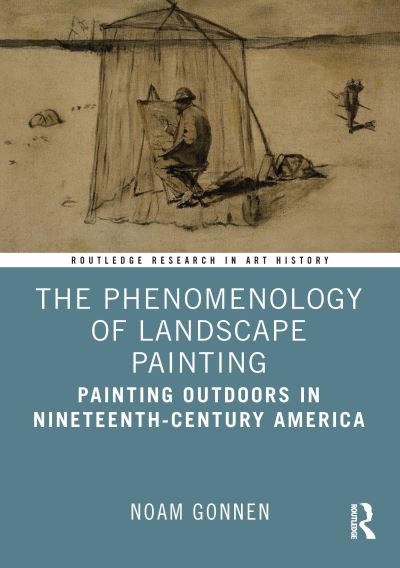
Offering a new view of nineteenth-century American landscape painting, this book focuses on the praxis of open-air painting and its distinctive role in generating and invigorating a new conceptualization of American landscape painting in the late nineteenth century.
Drawing on phenomenology and on theories of presence, embodiment, and making, the author traces the transition in landscape painting from Hudson River School aesthetics to a new ground, manifested in three aspects - immersiveness, materiality, and performance. Analyzing both paintings and primary sources such as tourist literature, art criticism, diary entries, artists' handbooks, treatises, and professional publications ranging from geography to physiology, the author underpins the significance of open-air painting in the history of American art and evaluates its reception against a backdrop of cultural, historical, and aesthetic shifts in the postbellum era. Overall, the book juxtaposes landscape experience with artistic experience and explores the tension between observing and making, thereby suggesting new analytical tools for nineteenth-century art and epistemology.
This is an ideal text for researchers in art history and theory, human geography, environmental studies, and philosophy.
| ISBN: | 9781041042495 |
| Publication date: | 30th April 2026 |
| Author: | Noam Gonnen |
| Publisher: | Routledge an imprint of Taylor & Francis |
| Format: | Hardback |
| Pagination: | 186 pages |
| Series: | Routledge Research in Art History |
| Genres: |
History of art Phenomenology and Existentialism Theory of art The Arts: art forms |
Offering a new view of nineteenth-century American landscape painting, this book focuses on the praxis of open-air painting and its distinctive role in generating and invigorating a new conceptualization of American landscape painting in the late nineteenth century.
Drawing on phenomenology and on theories of presence, embodiment, and making, the author traces the transition in landscape painting from Hudson River School aesthetics to a new ground, manifested in three aspects - immersiveness, materiality, and performance. Analyzing both paintings and primary sources such as tourist literature, art criticism, diary entries, artists' handbooks, treatises, and professional publications ranging from geography to physiology, the author underpins the significance of open-air painting in the history of American art and evaluates its reception against a backdrop of cultural, historical, and aesthetic shifts in the postbellum era. Overall, the book juxtaposes landscape experience with artistic experience and explores the tension between observing and making, thereby suggesting new analytical tools for nineteenth-century art and epistemology.
This is an ideal text for researchers in art history and theory, human geography, environmental studies, and philosophy.
The Phenomenology of Landscape Painting features in the following genres: History of art, Phenomenology and Existentialism, Theory of art, The Arts: art forms
The Phenomenology of Landscape Painting is available in Hardback
The Phenomenology of Landscape Painting was written by Noam Gonnen and published by Routledge an imprint of Taylor & Francis
The Phenomenology of Landscape Painting has 186 pages
Yes it is part of Routledge Research in Art History series
£154.79