

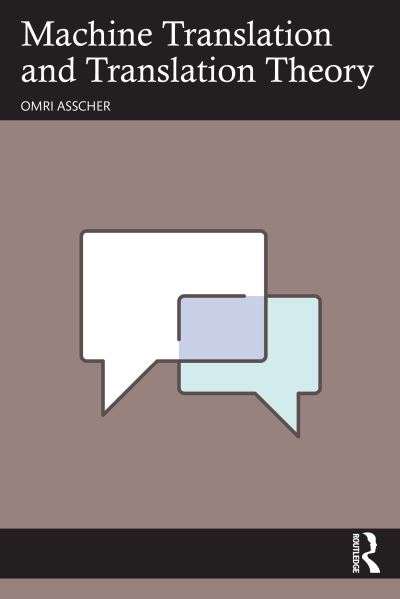
Pervasive and ubiquitous, machine translation systems have been transforming communication and understanding across languages and cultures on a historical scale. Focused on both Neural Machine Translation tools, such as Google Translate, and generative AI tools, such as ChatGPT, Omri Asscher pursues the juncture between machine translation and the diverse, often competing, frameworks of human translation theory. He shines a light on the subtleties of the intersection between the two: the places where machine translation corresponds well with the ideas that have been developed on human translation throughout the years, and the places where machine translation seems to challenge translation theory, and perhaps even require that we rethink some of its basic assumptions.
Machine Translation and Translation Theory reflects the need for an accessible, panoramic view on the subject. It offers a detailed discussion of various points of theoretical interest: definitions of translation; equivalence in translation; aesthetics of translation; translation ethics; translation as cross-cultural communication; and translation's historical agency.
This is key reading for researchers and students in translation studies, as well as scholars of AI-mediated communication, and computer scientists interested in how machine translation architectures correspond with the understanding of translation in the humanities.
| ISBN: | 9781041000662 |
| Publication date: | 17th July 2025 |
| Author: | Omri Asher |
| Publisher: | Routledge an imprint of Taylor & Francis |
| Format: | Paperback |
| Pagination: | 208 pages |
| Genres: |
Translation and interpretation Natural language and machine translation Artificial intelligence |
Pervasive and ubiquitous, machine translation systems have been transforming communication and understanding across languages and cultures on a historical scale. Focused on both Neural Machine Translation tools, such as Google Translate, and generative AI tools, such as ChatGPT, Omri Asscher pursues the juncture between machine translation and the diverse, often competing, frameworks of human translation theory. He shines a light on the subtleties of the intersection between the two: the places where machine translation corresponds well with the ideas that have been developed on human translation throughout the years, and the places where machine translation seems to challenge translation theory, and perhaps even require that we rethink some of its basic assumptions.
Machine Translation and Translation Theory reflects the need for an accessible, panoramic view on the subject. It offers a detailed discussion of various points of theoretical interest: definitions of translation; equivalence in translation; aesthetics of translation; translation ethics; translation as cross-cultural communication; and translation's historical agency.
This is key reading for researchers and students in translation studies, as well as scholars of AI-mediated communication, and computer scientists interested in how machine translation architectures correspond with the understanding of translation in the humanities.
Machine Translation and Translation Theory features in the following genres: Artificial intelligence, Translation and interpretation, Computational and corpus linguistics, Digital and information technologies: social and ethical aspects, Digital and information technologies: Legal aspects
Machine Translation and Translation Theory is available in Hardback, Paperback
Machine Translation and Translation Theory was written by Omri Asher and published by Routledge an imprint of Taylor & Francis
Machine Translation and Translation Theory has 208 pages
£36.89