

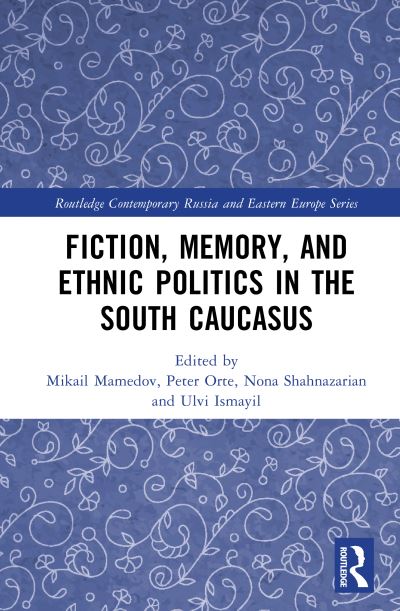
The book explores the aftermath of the disintegration of the Soviet Union and the effects of war and nationalism in the South Caucasus. While the Soviet Union's dissolution seemed to promise democracy and liberalization, the rise of nationalist movements in Armenia and Azerbaijan led to those countries becoming undemocratic monoethnic states, which ethnically cleansed their largest minorities.
During the violence of the first stage of the Karabakh War (1992-1994), Armenians were expelled from Azerbaijan, and Azerbaijanis were expelled from Armenia. The persistence of this violent conflict through the second (2020) and third (2023) stages has led to competing, incompatible national narratives and an entrenched imagination of the other as the enemy. Explaining these events' historical context by tracing them back to specific Soviet and Tsarist policies, the contributors of this volume examine the impact of the Karabakh conflict on ordinary people's lives in Armenia and Azerbaijan by analyzing fiction, film, and other forms of public memory. Ultimately, they show how "eternal enmity" is a myth and point to potential solutions to the conflict.
This study will be useful to students and scholars of Soviet and Post-Soviet History, Nationalism, Empire, and Conflict Studies.
| ISBN: | 9781032980157 |
| Publication date: | 30th September 2025 |
| Author: | Mikail Mamedov, Peter Orte, Nona Shahnazarian, Ulvi Ismayil |
| Publisher: | Routledge an imprint of Taylor & Francis |
| Format: | Hardback |
| Pagination: | 224 pages |
| Series: | Routledge Contemporary Russia and Eastern Europe Series |
| Genres: |
Regional / International studies Media studies Political campaigning and advertising General and world history European history Asian history Films, cinema Warfare and defence History and Archaeology |
The book explores the aftermath of the disintegration of the Soviet Union and the effects of war and nationalism in the South Caucasus. While the Soviet Union's dissolution seemed to promise democracy and liberalization, the rise of nationalist movements in Armenia and Azerbaijan led to those countries becoming undemocratic monoethnic states, which ethnically cleansed their largest minorities.
During the violence of the first stage of the Karabakh War (1992-1994), Armenians were expelled from Azerbaijan, and Azerbaijanis were expelled from Armenia. The persistence of this violent conflict through the second (2020) and third (2023) stages has led to competing, incompatible national narratives and an entrenched imagination of the other as the enemy. Explaining these events' historical context by tracing them back to specific Soviet and Tsarist policies, the contributors of this volume examine the impact of the Karabakh conflict on ordinary people's lives in Armenia and Azerbaijan by analyzing fiction, film, and other forms of public memory. Ultimately, they show how "eternal enmity" is a myth and point to potential solutions to the conflict.
This study will be useful to students and scholars of Soviet and Post-Soviet History, Nationalism, Empire, and Conflict Studies.
Fiction, Memory, and Ethnic Politics in the South Caucasus features in the following genres: Regional / International studies, Media studies, Political campaigning and advertising, General and world history, European history, Asian history, Films, cinema, Warfare and defence, History and Archaeology
Fiction, Memory, and Ethnic Politics in the South Caucasus is available in Hardback
Fiction, Memory, and Ethnic Politics in the South Caucasus was written by Mikail Mamedov, Peter Orte, Nona Shahnazarian, Ulvi Ismayil and published by Routledge an imprint of Taylor & Francis
Fiction, Memory, and Ethnic Politics in the South Caucasus has 224 pages
Yes it is part of Routledge Contemporary Russia and Eastern Europe Series series
£154.79