

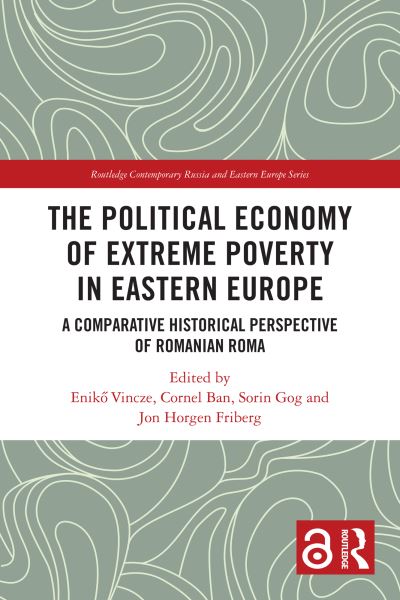
This book examines the creation of extreme poverty in Eastern Europe, focusing on Romanian Roma, through a comparative historical perspective on its roots and the socio-economic and political mechanisms that have shaped it in labor, housing, and migration.
This interdisciplinary book explores the (re)production of extreme poverty among the Roma across different political economy regimes. Chapters engage in comparative historical analysis across several disciplines and integrate perspectives steeped at the national level of analysis with those dwelling intensively on a single context. Focusing on the processes of manufacturing poverty among Roma in Romania, the chapters cover empirical information about the historical transformations of the economic situation of the Roma in Romania from the 19th century to the present, about global, national, and local processes of industrialization, deindustrialization, and reindustrialization impacting poverty among the Roma in the past seven decades, and about Roma people's current labor positions, housing conditions, and migration practices in distinct geographies from Romania to Norway.
The book situates Roma poverty research in a Central and Eastern European context by highlighting its connections with analytical approaches to poverty and institutional policy visions about poverty eradication. It will be of interest to researchers studying Central and Eastern Europe, political economy of socialism, political economy of capitalist transformations, poverty studies, welfare and housing regimes studies, and labor and migration studies.
The Open Access version of this book, available at http://www.taylorfrancis.com, has been made available under a Creative Commons Attribution-Non Commercial-No Derivatives (CC-BY-NC-ND) 4.0 license.
| ISBN: | 9781032862552 |
| Publication date: | 21st May 2026 |
| Author: | Eniko MagyariVincze, Cornel Ban, Sorin Gog, Jon Horgen Friberg |
| Publisher: | Routledge an imprint of Taylor & Francis |
| Format: | Paperback |
| Pagination: | 220 pages |
| Series: | Routledge Contemporary Russia and Eastern Europe Series |
| Genres: |
Social and cultural history Regional / urban economics Social classes Urban communities Ethnic studies Social and cultural anthropology Regional / International studies Development studies Sociology Politics and government |
This book examines the creation of extreme poverty in Eastern Europe, focusing on Romanian Roma, through a comparative historical perspective on its roots and the socio-economic and political mechanisms that have shaped it in labor, housing, and migration.
This interdisciplinary book explores the (re)production of extreme poverty among the Roma across different political economy regimes. Chapters engage in comparative historical analysis across several disciplines and integrate perspectives steeped at the national level of analysis with those dwelling intensively on a single context. Focusing on the processes of manufacturing poverty among Roma in Romania, the chapters cover empirical information about the historical transformations of the economic situation of the Roma in Romania from the 19th century to the present, about global, national, and local processes of industrialization, deindustrialization, and reindustrialization impacting poverty among the Roma in the past seven decades, and about Roma people's current labor positions, housing conditions, and migration practices in distinct geographies from Romania to Norway.
The book situates Roma poverty research in a Central and Eastern European context by highlighting its connections with analytical approaches to poverty and institutional policy visions about poverty eradication. It will be of interest to researchers studying Central and Eastern Europe, political economy of socialism, political economy of capitalist transformations, poverty studies, welfare and housing regimes studies, and labor and migration studies.
The Open Access version of this book, available at http://www.taylorfrancis.com, has been made available under a Creative Commons Attribution-Non Commercial-No Derivatives (CC-BY-NC-ND) 4.0 license.
The Political Economy of Extreme Poverty in Eastern Europe features in the following genres: Social and cultural history, Regional / urban economics, Social classes, Urban communities, Ethnic studies, Social and cultural anthropology, Regional / International studies, Development studies, Sociology, Politics and government
The Political Economy of Extreme Poverty in Eastern Europe is available in Paperback, Hardback
The Political Economy of Extreme Poverty in Eastern Europe was written by Eniko MagyariVincze, Cornel Ban, Sorin Gog, Jon Horgen Friberg and published by Routledge an imprint of Taylor & Francis
The Political Economy of Extreme Poverty in Eastern Europe has 220 pages
Yes it is part of Routledge Contemporary Russia and Eastern Europe Series series
£43.19