

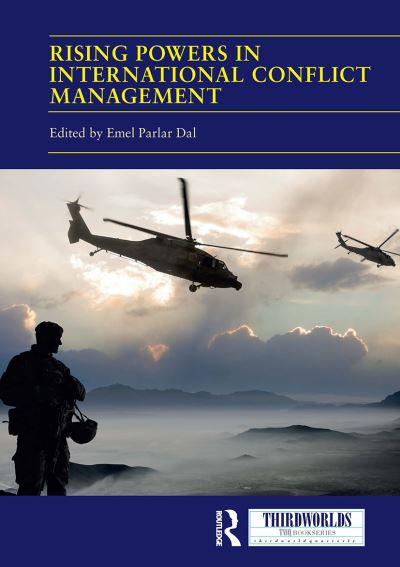
Rising Powers in International Conflict Management locates rising powers in the international conflict management tableau and decrypts their main motives and limitations in the enactment of their peacebuilding role.
The book sheds light on commonalities and divergences in a selected group of rising powers' (namely Brazil, India, China, and Turkey) understanding and applications of conflict management and explains the priorities in their conflict management strategies from conceptual/theoretical and empirical aspects. The case studies point to the evolving nature of conflict management policies of rising powers as a result of their changing priorities in foreign and security policy and the shifts observed in the international order since the end of the Cold War. The country-specific perspectives provided in this study have also proven right the potentialities of rising powers in managing conflicts, as well as their past and ongoing challenges in envisaging crises in both their own regions and extra-regional territories.
Improving the understanding of the strengths and weaknesses of rising powers as conflict management actors and peacebuilders at regional and international levels, Rising Powers in International Conflict Management will be of great interest to scholars of international relations, conflict studies, and peacebuilding. The chapters were originally published as a special issue of Third World Quarterly.
| ISBN: | 9781032838915 |
| Publication date: | 24th June 2024 |
| Author: | Emel Parlar Dal |
| Publisher: | Routledge an imprint of Taylor & Francis |
| Format: | Paperback |
| Pagination: | 162 pages |
| Series: | Thirdworlds |
| Genres: |
Peace studies and conflict resolution International relations |
Rising Powers in International Conflict Management locates rising powers in the international conflict management tableau and decrypts their main motives and limitations in the enactment of their peacebuilding role.
The book sheds light on commonalities and divergences in a selected group of rising powers' (namely Brazil, India, China, and Turkey) understanding and applications of conflict management and explains the priorities in their conflict management strategies from conceptual/theoretical and empirical aspects. The case studies point to the evolving nature of conflict management policies of rising powers as a result of their changing priorities in foreign and security policy and the shifts observed in the international order since the end of the Cold War. The country-specific perspectives provided in this study have also proven right the potentialities of rising powers in managing conflicts, as well as their past and ongoing challenges in envisaging crises in both their own regions and extra-regional territories.
Improving the understanding of the strengths and weaknesses of rising powers as conflict management actors and peacebuilders at regional and international levels, Rising Powers in International Conflict Management will be of great interest to scholars of international relations, conflict studies, and peacebuilding. The chapters were originally published as a special issue of Third World Quarterly.
Rising Powers in International Conflict Management features in the following genres: Peace studies and conflict resolution, International relations
Rising Powers in International Conflict Management is available in Paperback, Hardback
Rising Powers in International Conflict Management was written by Emel Parlar Dal and published by Routledge an imprint of Taylor & Francis
Rising Powers in International Conflict Management has 162 pages
Yes it is part of Thirdworlds series
£40.49