

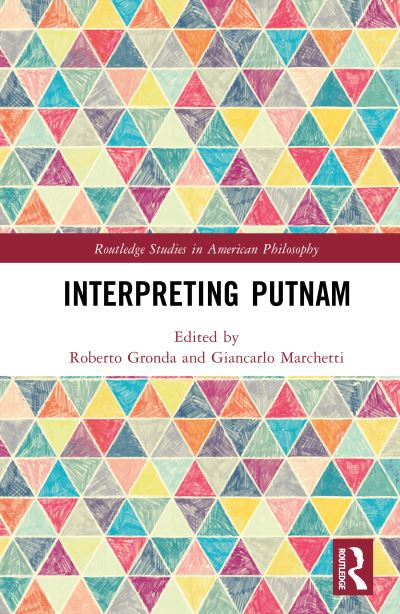
Hilary Putnam is widely regarded as one of the most influential philosophers of the 20th century. This volume deals with the manifold aspects of Putnam's philosophy, either by reconstructing its internal evolution or by showing its originality and relevance for contemporary debates.
Putnam's contributions have had a profound impact across a wide range of philosophical subdisciplines. His thought, therefore, poses a challenge to the drive toward specialization that characterizes contemporary philosophy. As he openly argues in Realism with a Human Face, philosophical reflection must satisfy two equally legitimate demands: the scholastic conception of philosophy suggests that efforts should be directed towards the solution of tiny and neatly defined problems, while the cosmic conception urges us to address the general question of how knowledge relates to the essential ends of human reason. To reflect on Putnam's philosophy, therefore, is to reflect on how philosophical work should be done. The chapters in this volume feature a pluralistic approach that attempts to cover the whole spectrum of Putnam's philosophy, from his work in epistemology, philosophy of science, and philosophy of mind, to his reflections on ethics, pragmatism, Jewish philosophy, religion, and politics. Taken together, the chapters not only recognize the limits, challenges, and fruitfulness of Putnam's thought, but also provide novel assessments of his philosophy and use it as a springboard for developing new and original theoretical insights.
Interpreting Putnam will appeal to scholars and advanced students working in philosophy of science, philosophy of mind, philosophy of language, ethics, philosophy of religion, political philosophy, pragmatism, history of analytic philosophy, and American philosophy.
| ISBN: | 9781032654676 |
| Publication date: | 31st July 2026 |
| Author: | Roberto Gronda, Giancarlo Marchetti |
| Publisher: | Routledge an imprint of Taylor & Francis |
| Format: | Hardback |
| Pagination: | 406 pages |
| Series: | Routledge Studies in American Philosophy |
| Genres: |
Western philosophy from c 1800 Philosophy: epistemology and theory of knowledge Philosophy of mind Ethics and moral philosophy Social and political philosophy Philosophy of religion Theology Philosophy of language Philosophy of science Philosophical traditions and schools of thought Judaism |
Hilary Putnam is widely regarded as one of the most influential philosophers of the 20th century. This volume deals with the manifold aspects of Putnam's philosophy, either by reconstructing its internal evolution or by showing its originality and relevance for contemporary debates.
Putnam's contributions have had a profound impact across a wide range of philosophical subdisciplines. His thought, therefore, poses a challenge to the drive toward specialization that characterizes contemporary philosophy. As he openly argues in Realism with a Human Face, philosophical reflection must satisfy two equally legitimate demands: the scholastic conception of philosophy suggests that efforts should be directed towards the solution of tiny and neatly defined problems, while the cosmic conception urges us to address the general question of how knowledge relates to the essential ends of human reason. To reflect on Putnam's philosophy, therefore, is to reflect on how philosophical work should be done. The chapters in this volume feature a pluralistic approach that attempts to cover the whole spectrum of Putnam's philosophy, from his work in epistemology, philosophy of science, and philosophy of mind, to his reflections on ethics, pragmatism, Jewish philosophy, religion, and politics. Taken together, the chapters not only recognize the limits, challenges, and fruitfulness of Putnam's thought, but also provide novel assessments of his philosophy and use it as a springboard for developing new and original theoretical insights.
Interpreting Putnam will appeal to scholars and advanced students working in philosophy of science, philosophy of mind, philosophy of language, ethics, philosophy of religion, political philosophy, pragmatism, history of analytic philosophy, and American philosophy.
Interpreting Putnam features in the following genres: Western philosophy from c 1800, Philosophy: epistemology and theory of knowledge, Philosophy of mind, Ethics and moral philosophy, Social and political philosophy, Philosophy of religion, Theology, Philosophy of language, Philosophy of science, Philosophical traditions and schools of thought, Judaism
Interpreting Putnam is available in Hardback
Interpreting Putnam was written by Roberto Gronda, Giancarlo Marchetti and published by Routledge an imprint of Taylor & Francis
Interpreting Putnam has 406 pages
Yes it is part of Routledge Studies in American Philosophy series
£139.50