

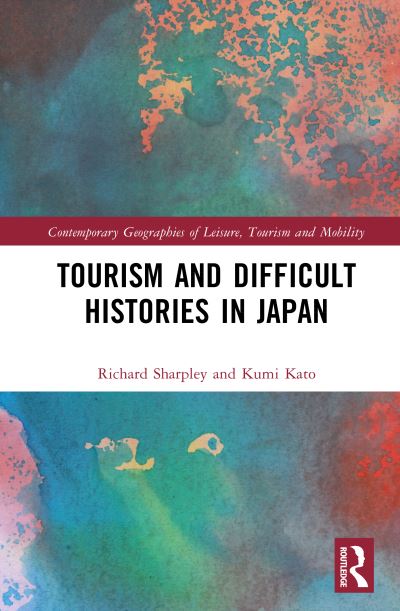
This book explores the relationship between tourism and difficult histories in Japan. More specifically, it considers the manner in which places associated with past dark events are presented and interpreted for tourists. In so doing, it seeks to identify the extent to which tourism contributes to enhancing mutual understanding as a stated objective of Japanese tourism policy.
The book presents a range of tourist destinations which offer the opportunity to consider dark events in Japanese history in the context of broader contemporary debates surrounding how such events should be remembered and the contribution of these tourist destinations to peace and reconciliation. Case studies include both well- and lesser-known destinations related to the Pacific War, from a comparison of the Hiroshima and Nagasaki Peace/Atomic Bomb Museums to an island where poison gas was manufactured and a former copper mine in which prisoners of war worked during 1944-1945. Other case studies focus on disaster sites, contentious industrial heritage, controversial Hansen's disease (leprosy) sanatoria and more.
This significant volume contributes to an understanding of the relationship between tourism and difficult histories in Japan. This will appeal widely across disciplines, including Tourism, Asian Studies, Geography, War and Reconciliation Studies, Peace Studies and International Relations.
| ISBN: | 9781032608808 |
| Publication date: | 31st December 2025 |
| Author: | Richard Sharpley, Kumi Kato |
| Publisher: | Routledge an imprint of Taylor & Francis |
| Format: | Hardback |
| Pagination: | 220 pages |
| Series: | Contemporary Geographies of Leisure, Tourism and Mobility |
| Genres: |
Retail and wholesale industries |
This book explores the relationship between tourism and difficult histories in Japan. More specifically, it considers the manner in which places associated with past dark events are presented and interpreted for tourists. In so doing, it seeks to identify the extent to which tourism contributes to enhancing mutual understanding as a stated objective of Japanese tourism policy.
The book presents a range of tourist destinations which offer the opportunity to consider dark events in Japanese history in the context of broader contemporary debates surrounding how such events should be remembered and the contribution of these tourist destinations to peace and reconciliation. Case studies include both well- and lesser-known destinations related to the Pacific War, from a comparison of the Hiroshima and Nagasaki Peace/Atomic Bomb Museums to an island where poison gas was manufactured and a former copper mine in which prisoners of war worked during 1944-1945. Other case studies focus on disaster sites, contentious industrial heritage, controversial Hansen's disease (leprosy) sanatoria and more.
This significant volume contributes to an understanding of the relationship between tourism and difficult histories in Japan. This will appeal widely across disciplines, including Tourism, Asian Studies, Geography, War and Reconciliation Studies, Peace Studies and International Relations.
Tourism and Difficult Histories in Japan features in the following genres: Retail and wholesale industries
Tourism and Difficult Histories in Japan is available in Hardback
Tourism and Difficult Histories in Japan was written by Richard Sharpley, Kumi Kato and published by Routledge an imprint of Taylor & Francis
Tourism and Difficult Histories in Japan has 220 pages
Yes it is part of Contemporary Geographies of Leisure, Tourism and Mobility series
£154.79