

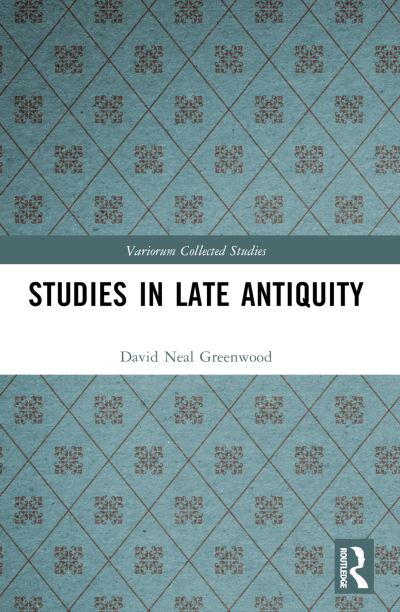
Late Antiquity was an era of remarkable change as beliefs were shaped and reshaped by the competing philosophies of traditional Greco-Roman religion, Middle and Neoplatonist philosophy, and the theology of the early Church.Current narratives of both peaceful competition and violent struggle between Christianity and paganism are reductive. The research presented in this Variorum volume, originally published between 2013 and 2018 in the fields of history, divinity, and philosophy, demonstrates the complexity of the age and provides a more complete picture of major actors including the emperor Julian, Porphyry of Tyre, and Celsus. From the second to the fourth centuries, these were some of the major players in attempting to define the terrain in the conflict between their philosophies and the Christian religion. While the timeframe remains consistently within the late second to the mid-fourth centuries A.D., the sources range between inscriptions, literature, and historical accounts. The particular focus is the emperor Julian (Flavius Claudius Julianus, d. 363), a figure of perennial interest, as not only the last pagan emperor, but the last anti-Christian polemicist of real significance in antiquity.This volume offers a new perspective on Julian, bringing together research from ancient history, Neoplatonist philosophy, and patristic theology, and will be useful to students and scholars alike.
| ISBN: | 9781032563930 |
| Publication date: | 26th December 2025 |
| Author: | David Neal Greenwood |
| Publisher: | Routledge an imprint of Taylor & Francis |
| Format: | Paperback |
| Pagination: | 184 pages |
| Series: | Variorum Collected Studies |
| Genres: |
Christianity Eclectic and esoteric religions and belief systems Social and cultural history History of religion Ancient history |
Late Antiquity was an era of remarkable change as beliefs were shaped and reshaped by the competing philosophies of traditional Greco-Roman religion, Middle and Neoplatonist philosophy, and the theology of the early Church.Current narratives of both peaceful competition and violent struggle between Christianity and paganism are reductive. The research presented in this Variorum volume, originally published between 2013 and 2018 in the fields of history, divinity, and philosophy, demonstrates the complexity of the age and provides a more complete picture of major actors including the emperor Julian, Porphyry of Tyre, and Celsus. From the second to the fourth centuries, these were some of the major players in attempting to define the terrain in the conflict between their philosophies and the Christian religion. While the timeframe remains consistently within the late second to the mid-fourth centuries A.D., the sources range between inscriptions, literature, and historical accounts. The particular focus is the emperor Julian (Flavius Claudius Julianus, d. 363), a figure of perennial interest, as not only the last pagan emperor, but the last anti-Christian polemicist of real significance in antiquity.This volume offers a new perspective on Julian, bringing together research from ancient history, Neoplatonist philosophy, and patristic theology, and will be useful to students and scholars alike.
Studies in Late Antiquity features in the following genres: Christianity, Eclectic and esoteric religions and belief systems, Social and cultural history, History of religion, Ancient history
Studies in Late Antiquity is available in Paperback, Hardback
Studies in Late Antiquity was written by David Neal Greenwood and published by Routledge an imprint of Taylor & Francis
Studies in Late Antiquity has 184 pages
Yes it is part of Variorum Collected Studies series
£43.19