

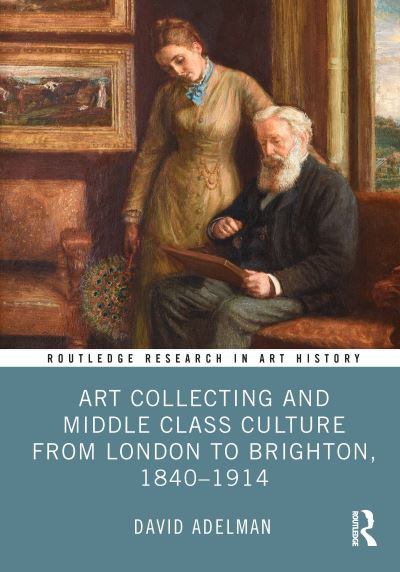
This study explores the interplay between money, status, politics and art collecting in the public and private lives of members of the wealthy trading classes in Brighton during the period 1840-1914.
Chapters focus on the collecting practices of five rich and upwardly mobile Victorians: William Coningham (1815-84), Henry Hill (1813-82), Henry Willett (1823-1905) and Harriet Trist (1816-96) and her husband John Hamilton Trist (1812-91). The book examines the relationship between the wealth of these would-be members of the Brighton bourgeoisie and the social and political meanings of their art collections paid for out of fortunes made from sugar, tailoring, beer and wine. It explores their luxury lifestyles and civic activities including the making of Brighton museum and art gallery, which reflected a paradoxical mix of patrician and liberal views, of aristocratic aspiration and radical rhetoric. It also highlights the centrality of the London art world to their collecting facilitated by the opening of the London to Brighton railway line in 1841.
The book will be of interest to scholars working in art history, museum studies and British history.
| ISBN: | 9781032538242 |
| Publication date: | 26th December 2025 |
| Author: | David Adelman |
| Publisher: | Routledge an imprint of Taylor & Francis |
| Format: | Paperback |
| Pagination: | 240 pages |
| Series: | Routledge Research in Art History |
| Genres: |
History of art Social and cultural history Museology and heritage studies Regional / International studies European history The arts: general topics |
This study explores the interplay between money, status, politics and art collecting in the public and private lives of members of the wealthy trading classes in Brighton during the period 1840-1914.
Chapters focus on the collecting practices of five rich and upwardly mobile Victorians: William Coningham (1815-84), Henry Hill (1813-82), Henry Willett (1823-1905) and Harriet Trist (1816-96) and her husband John Hamilton Trist (1812-91). The book examines the relationship between the wealth of these would-be members of the Brighton bourgeoisie and the social and political meanings of their art collections paid for out of fortunes made from sugar, tailoring, beer and wine. It explores their luxury lifestyles and civic activities including the making of Brighton museum and art gallery, which reflected a paradoxical mix of patrician and liberal views, of aristocratic aspiration and radical rhetoric. It also highlights the centrality of the London art world to their collecting facilitated by the opening of the London to Brighton railway line in 1841.
The book will be of interest to scholars working in art history, museum studies and British history.
Art Collecting and Middle Class Culture from London to Brighton, 1840-1914 features in the following genres: History of art, Social and cultural history, Museology and heritage studies, Regional / International studies, European history, The arts: general topics
Art Collecting and Middle Class Culture from London to Brighton, 1840-1914 is available in Paperback, Hardback
Art Collecting and Middle Class Culture from London to Brighton, 1840-1914 was written by David Adelman and published by Routledge an imprint of Taylor & Francis
Art Collecting and Middle Class Culture from London to Brighton, 1840-1914 has 240 pages
Yes it is part of Routledge Research in Art History series
£43.19