

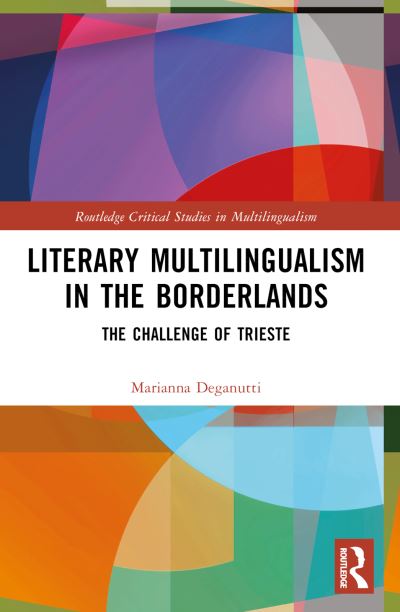
This book focuses on literary multilingualism and specifically on the challenging condition of writing in Trieste, a key European borderland located at the intersection between the Latin, Germanic and Slav civilisations.
By focusing on some of the most representative modern writers operating in the area, such as Italo Svevo, Boris Pahor, Claudio Magris and James Joyce, this work offers a wide-ranging discussion of multilingual practices deriving from the different language choices made by these writers. Along with the most common manifest strategies, such as code-switching and hybridisations, Deganutti highlights how Triestine writers found innovative latent practices to engage with multilingualism, such as writing in an analogical way or exploiting internal linguistic stratifications. Moreover, she shows how they provided answers to the several linguistic, cultural and even political challenges they were subjected to, with the result of redefining linguistic boundaries that clearly separate different tongues.
This book will be of interest to graduate students, researchers and academics interested in literary multilingualism in the fields of sociolinguistics, borderland studies and comparative literature.
| ISBN: | 9781032213279 |
| Publication date: | 18th December 2024 |
| Author: | Marianna Deganutti |
| Publisher: | Routledge an imprint of Taylor & Francis |
| Format: | Paperback |
| Pagination: | 206 pages |
| Series: | Routledge Critical Studies in Multilingualism |
| Genres: |
Sociolinguistics Bilingualism and multilingualism Literary studies: general |
This book focuses on literary multilingualism and specifically on the challenging condition of writing in Trieste, a key European borderland located at the intersection between the Latin, Germanic and Slav civilisations.
By focusing on some of the most representative modern writers operating in the area, such as Italo Svevo, Boris Pahor, Claudio Magris and James Joyce, this work offers a wide-ranging discussion of multilingual practices deriving from the different language choices made by these writers. Along with the most common manifest strategies, such as code-switching and hybridisations, Deganutti highlights how Triestine writers found innovative latent practices to engage with multilingualism, such as writing in an analogical way or exploiting internal linguistic stratifications. Moreover, she shows how they provided answers to the several linguistic, cultural and even political challenges they were subjected to, with the result of redefining linguistic boundaries that clearly separate different tongues.
This book will be of interest to graduate students, researchers and academics interested in literary multilingualism in the fields of sociolinguistics, borderland studies and comparative literature.
Literary Multilingualism in the Borderlands features in the following genres: Sociolinguistics, Bilingualism and multilingualism, Literary studies: general
Literary Multilingualism in the Borderlands is available in Paperback, Hardback
Literary Multilingualism in the Borderlands was written by Marianna Deganutti and published by Routledge an imprint of Taylor & Francis
Literary Multilingualism in the Borderlands has 206 pages
Yes it is part of Routledge Critical Studies in Multilingualism series
£39.59