

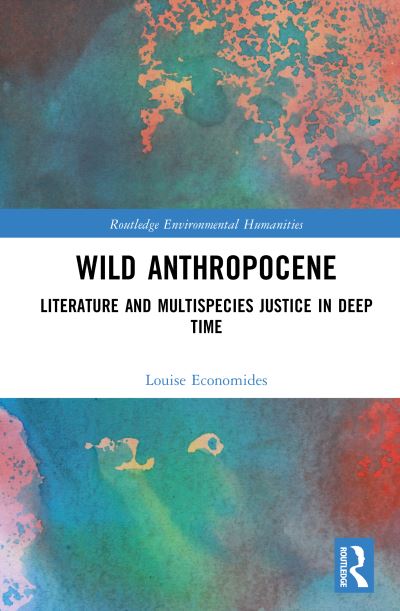
Wild Anthropocene examines four key areas-the politics of deep time, neoliberalism's socio-ecological impacts, global population growth and inter-species entanglement-to demonstrate how literature illuminates progressive solutions to Anthropocene challenges. The book argues that technological mitigation of contemporary environmental crises must be complimented by a politics committed to multispecies justice. Central to this new politics is the project of reimagining our relationship with time as something other than its status within capitalist praxis.
The book brings together poetry and fiction written by a diverse range of writers to demonstrate how contemporary literature addresses important connections between social oppression and environmental issues. It also critiques techno-managerial visions of the future that celebrate humanity's ever-growing "control" over ecosystems by examining multiple sources of wildness (temporal, environmental and technological) that expose the problematic ideology underwriting such aspirations. Readers will be introduced to a way of understanding the Anthropocene that, while being informed by recent discoveries in earth science and evolutionary biology, also makes a strong case for humanities-based understanding of environmental politics.
This interdisciplinary text will be a useful addition to theoretical discussions on the Anthropocene for scholars, researchers and students in the environmental humanities, literary studies, ecocriticism and environmental philosophy.
| ISBN: | 9781032153902 |
| Publication date: | 17th April 2025 |
| Author: | Louise Economides |
| Publisher: | Routledge an imprint of Taylor & Francis |
| Format: | Hardback |
| Pagination: | 184 pages |
| Series: | Routledge Environmental Humanities |
| Genres: |
Environmentalist thought and ideology Biodiversity Environmental policy and protocols Conservation of the environment Literary theory Literary studies: general Botany and plant sciences |
Wild Anthropocene examines four key areas-the politics of deep time, neoliberalism's socio-ecological impacts, global population growth and inter-species entanglement-to demonstrate how literature illuminates progressive solutions to Anthropocene challenges. The book argues that technological mitigation of contemporary environmental crises must be complimented by a politics committed to multispecies justice. Central to this new politics is the project of reimagining our relationship with time as something other than its status within capitalist praxis.
The book brings together poetry and fiction written by a diverse range of writers to demonstrate how contemporary literature addresses important connections between social oppression and environmental issues. It also critiques techno-managerial visions of the future that celebrate humanity's ever-growing "control" over ecosystems by examining multiple sources of wildness (temporal, environmental and technological) that expose the problematic ideology underwriting such aspirations. Readers will be introduced to a way of understanding the Anthropocene that, while being informed by recent discoveries in earth science and evolutionary biology, also makes a strong case for humanities-based understanding of environmental politics.
This interdisciplinary text will be a useful addition to theoretical discussions on the Anthropocene for scholars, researchers and students in the environmental humanities, literary studies, ecocriticism and environmental philosophy.
Wild Anthropocene features in the following genres: Environmentalist thought and ideology, Biodiversity, Environmental policy and protocols, Conservation of the environment, Literary theory, Literary studies: general, Botany and plant sciences
Wild Anthropocene is available in Hardback
Wild Anthropocene was written by Louise Economides and published by Routledge an imprint of Taylor & Francis
Wild Anthropocene has 184 pages
Yes it is part of Routledge Environmental Humanities series
£154.79