

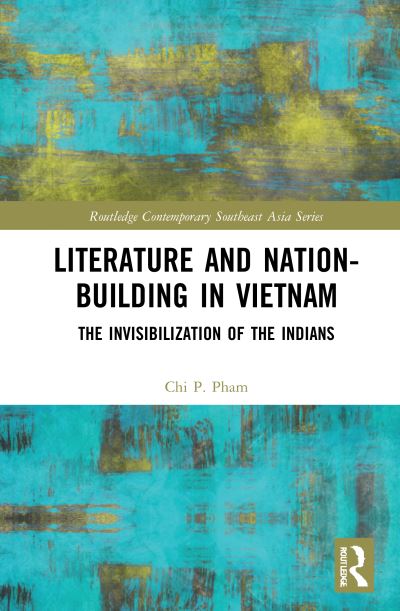
This book analyzes why Indians have been made invisible in Vietnamese society and historiography. It argues that their invisibilization originates in the formulaic metaphor Vietnamese nation-makers have used to portray Indians in their quest for national sovereignty and socialism.
The book presents a complex view on colonial legacies in Vietnam which suggests that Vietnamese nation-makers associate Indians with colonialism and capitalism, ultimately viewed as "non-socialist" and "non-hegemonic" state structures. Furthermore, the book demonstrates how Vietnamese nation-makers achieve the overriding socialist and independent goal of historically differing Indians from Vietnamese nationalisms whilst simultaneously making them invisible. In addition to primary Vietnamese texts which demonstrate the performativity of language and the Vietnamese traditional belief in writing as a sharp weapon for national and class struggles, the author utilizes interviews with Indians and Vietnamese authorities in charge of managing the Indian population.
Bringing to the surface the ways through which Vietnamese intellectuals have invisibilized the Indians for the sake of the visibility of national hegemony and prosperity, this book will be of interest to scholars of Southeast Asian Studies and South Asian Studies, Vietnam Studies, including nation-building, literature, and language.
| ISBN: | 9781032020266 |
| Publication date: | 9th January 2023 |
| Author: | Chi P Pham |
| Publisher: | Routledge an imprint of Taylor & Francis |
| Format: | Paperback |
| Pagination: | 152 pages |
| Series: | Routledge Contemporary Southeast Asia Series |
| Genres: |
Regional / International studies Literary studies: postcolonial literature Asian history Society and culture: general Politics and government History and Archaeology |
This book analyzes why Indians have been made invisible in Vietnamese society and historiography. It argues that their invisibilization originates in the formulaic metaphor Vietnamese nation-makers have used to portray Indians in their quest for national sovereignty and socialism.
The book presents a complex view on colonial legacies in Vietnam which suggests that Vietnamese nation-makers associate Indians with colonialism and capitalism, ultimately viewed as "non-socialist" and "non-hegemonic" state structures. Furthermore, the book demonstrates how Vietnamese nation-makers achieve the overriding socialist and independent goal of historically differing Indians from Vietnamese nationalisms whilst simultaneously making them invisible. In addition to primary Vietnamese texts which demonstrate the performativity of language and the Vietnamese traditional belief in writing as a sharp weapon for national and class struggles, the author utilizes interviews with Indians and Vietnamese authorities in charge of managing the Indian population.
Bringing to the surface the ways through which Vietnamese intellectuals have invisibilized the Indians for the sake of the visibility of national hegemony and prosperity, this book will be of interest to scholars of Southeast Asian Studies and South Asian Studies, Vietnam Studies, including nation-building, literature, and language.
Literature and Nation-Building in Vietnam features in the following genres: Regional / International studies, Literary studies: postcolonial literature, Asian history, Society and culture: general, Politics and government, History and Archaeology
Literature and Nation-Building in Vietnam is available in Paperback, Hardback, Ebook
Literature and Nation-Building in Vietnam was written by Chi P Pham and published by Routledge an imprint of Taylor & Francis
Literature and Nation-Building in Vietnam has 152 pages
Yes it is part of Routledge Contemporary Southeast Asia Series series
£37.79