

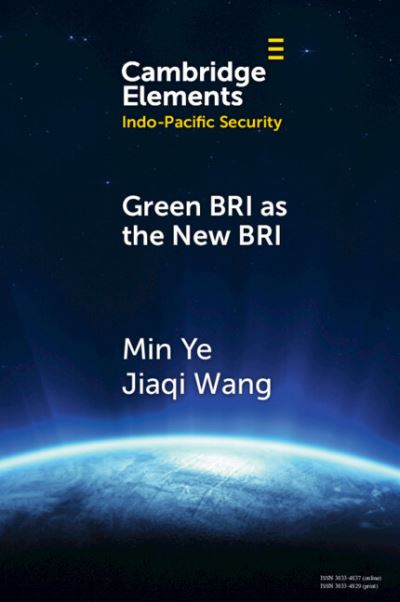
China's Green Belt and Road Initiative (GBRI) was launched in 2017 to address key criticisms of the original BRI and to better align China's overseas development strategy with the global climate agenda. This research examines whether the GBRI represents a genuine shift in China or just a symbolic gesture, and explores its underlying domestic and international drivers. Specifically, it interrogates three prevailing interpretations of the GBRI: a greenwashing tactic, a geopolitical strategy, and a global climate cooperation effort. Our analysis reveals a more dynamic and nuanced process behind the GBRI's emergence and evolution in China. On the one hand, the initiative is rooted in Chinese green industrialization and globalization, interacting with external opportunities and constraints. On the other hand, the rise of GBRI has elicited diverse responses: while US-aligned countries have imposed barriers, emerging markets, while selectively, have embraced Chinese green energy investments.
| ISBN: | 9781009616492 |
| Publication date: | 31st May 2026 |
| Author: | Min Ye, Jiaqi Wang |
| Publisher: | Cambridge University Press |
| Format: | Paperback |
| Pagination: | 98 pages |
| Series: | Cambridge Elements. Elements in Indo-Pacific Security |
| Genres: |
International relations Environmental policy and protocols |
China's Green Belt and Road Initiative (GBRI) was launched in 2017 to address key criticisms of the original BRI and to better align China's overseas development strategy with the global climate agenda. This research examines whether the GBRI represents a genuine shift in China or just a symbolic gesture, and explores its underlying domestic and international drivers. Specifically, it interrogates three prevailing interpretations of the GBRI: a greenwashing tactic, a geopolitical strategy, and a global climate cooperation effort. Our analysis reveals a more dynamic and nuanced process behind the GBRI's emergence and evolution in China. On the one hand, the initiative is rooted in Chinese green industrialization and globalization, interacting with external opportunities and constraints. On the other hand, the rise of GBRI has elicited diverse responses: while US-aligned countries have imposed barriers, emerging markets, while selectively, have embraced Chinese green energy investments.
Green BRI as the New BRI features in the following genres: International relations, Environmental policy and protocols
Green BRI as the New BRI is available in Hardback, Paperback
Green BRI as the New BRI was written by Min Ye, Jiaqi Wang and published by Cambridge University Press
Green BRI as the New BRI has 98 pages
Yes it is part of Cambridge Elements. Elements in Indo-Pacific Security series
£16.20