

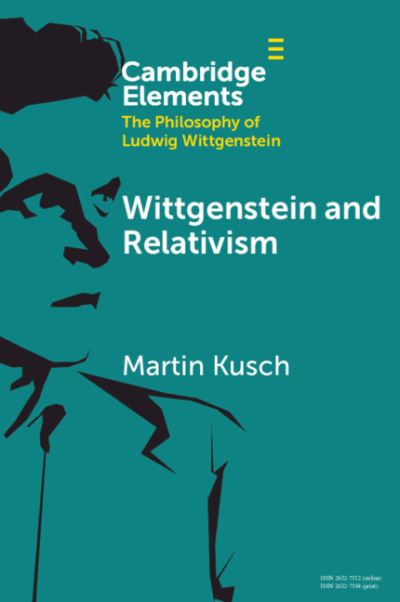
When scholars discuss the question whether Wittgenstein was a relativist, they invariably draw their criteria from recent definitions of relativism. This study tries a different route: it identifies conceptions of relativism that were influential in the early twentieth century, and uses them as foils for interpreting Wittgenstein's philosophy. Section 1 investigates what Wittgenstein meant in speaking of his 'ethnological perspective,' and how this perspective relates to 'cultural relativism' in anthropology around 1900. Section 2 focuses on Wittgenstein's reflections on logic and mathematics as 'ethnological phenomena.' In this context, the ethnological perspective brought Wittgenstein close to positions that many of his contemporaries denounced as 'psychologism' and 'sociologism.' Section 3 highlights the role of the ethnological perspective in Wittgenstein's remarks on 'certainties.' Many of these remarks would have been counted as relativistic by leading members of the 'Vienna Circle.'
| ISBN: | 9781009554565 |
| Publication date: | 14th May 2026 |
| Author: | Martin Kusch |
| Publisher: | Cambridge University Press |
| Format: | Paperback |
| Pagination: | 75 pages |
| Series: | Cambridge Elements. Elements in the Philosophy of Ludwig Wittgenstein |
| Genres: |
Social and cultural anthropology Ethology and animal behaviour Philosophy: epistemology and theory of knowledge Philosophy: logic |
When scholars discuss the question whether Wittgenstein was a relativist, they invariably draw their criteria from recent definitions of relativism. This study tries a different route: it identifies conceptions of relativism that were influential in the early twentieth century, and uses them as foils for interpreting Wittgenstein's philosophy. Section 1 investigates what Wittgenstein meant in speaking of his 'ethnological perspective,' and how this perspective relates to 'cultural relativism' in anthropology around 1900. Section 2 focuses on Wittgenstein's reflections on logic and mathematics as 'ethnological phenomena.' In this context, the ethnological perspective brought Wittgenstein close to positions that many of his contemporaries denounced as 'psychologism' and 'sociologism.' Section 3 highlights the role of the ethnological perspective in Wittgenstein's remarks on 'certainties.' Many of these remarks would have been counted as relativistic by leading members of the 'Vienna Circle.'
Wittgenstein and Relativism features in the following genres: Social and cultural anthropology, Ethology and animal behaviour, Philosophy: epistemology and theory of knowledge, Philosophy: logic
Wittgenstein and Relativism is available in Hardback, Paperback
Wittgenstein and Relativism was written by Martin Kusch and published by Cambridge University Press
Wittgenstein and Relativism has 75 pages
Yes it is part of Cambridge Elements. Elements in the Philosophy of Ludwig Wittgenstein series
£16.20