

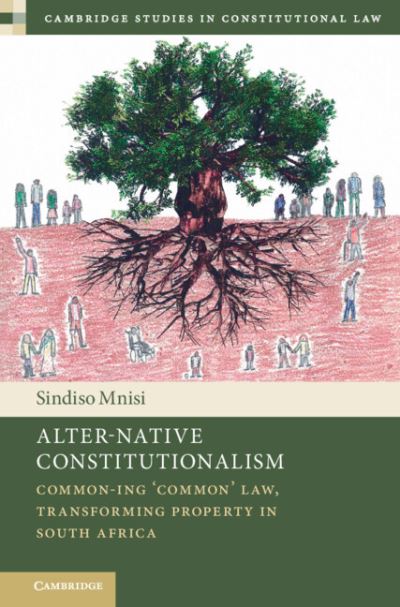
South Africa presents the perplexing paradox of arguably having the most progressive Constitution in the world, marked by full-throated socio-economic rights protection, while also being one of the most unequal countries in the world. This book takes seriously increasing sociopolitical challenges to the legitimacy of South Africa's post-apartheid legal order and scorching critiques of the constitutional settlement, against which many in the legal establishment bristle. Sindiso Mnisi develops 'Alter-Native Constitutionalism,' which is distinguished by equitable amalgamation of customary and common law with vernacular (or 'living') law, as a more compelling and just model for South Africa to adopt in its future than the legal pluralism that largely represents the afterlives of colonialism. This book draws on and contributes to international debates about the role of law in decolonising post-colonial orders and economic redistribution, addressing issues of poverty and inequality, gender, race, indigeneity, and customary vs vernacular law.
| ISBN: | 9781009311915 |
| Publication date: | 19th February 2026 |
| Author: | Sindiso Mnisi Weeks |
| Publisher: | Cambridge University Press |
| Format: | Hardback |
| Pagination: | 290 pages |
| Series: | Cambridge Studies in Constitutional Law |
| Genres: |
Constitutional and administrative law: general Social and cultural anthropology Public Law |
South Africa presents the perplexing paradox of arguably having the most progressive Constitution in the world, marked by full-throated socio-economic rights protection, while also being one of the most unequal countries in the world. This book takes seriously increasing sociopolitical challenges to the legitimacy of South Africa's post-apartheid legal order and scorching critiques of the constitutional settlement, against which many in the legal establishment bristle. Sindiso Mnisi develops 'Alter-Native Constitutionalism,' which is distinguished by equitable amalgamation of customary and common law with vernacular (or 'living') law, as a more compelling and just model for South Africa to adopt in its future than the legal pluralism that largely represents the afterlives of colonialism. This book draws on and contributes to international debates about the role of law in decolonising post-colonial orders and economic redistribution, addressing issues of poverty and inequality, gender, race, indigeneity, and customary vs vernacular law.
Alter-Native Constitutionalism features in the following genres: Constitutional and administrative law: general, Social and cultural anthropology, Public Law
Alter-Native Constitutionalism is available in Hardback
Alter-Native Constitutionalism was written by Sindiso Mnisi Weeks and published by Cambridge University Press
Alter-Native Constitutionalism has 290 pages
Yes it is part of Cambridge Studies in Constitutional Law series
£103.50