

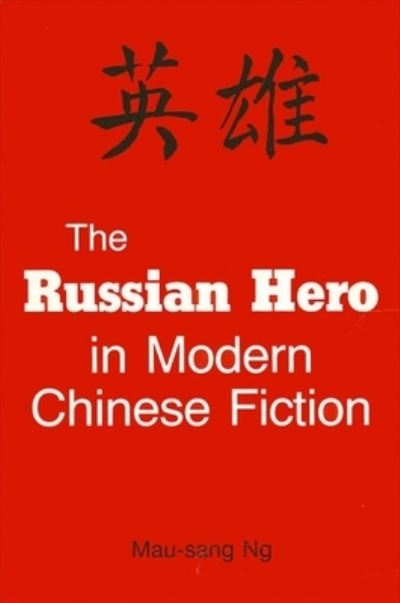
The Russian influence took root in the Chinese intellectual tradition that evolved after the Literary Revolution of 1917. When the Chinese communists turned to Russia for their inspiration they also accepted the Russian version of the novel's form and function in society. However, they did not accept it uncritically. Chinese understanding of the arts goes back for thousands of years and thus Chinese intellectuals brought their own kinds of tradition and intelligence to these new arts and political solutions.
In this lucid study, the author demonstrates how Chinese writers, guided by Russian authors such as Chekhov, Turgenev, and Andreyev, created works of art that are both original and Chinese. However, he also shows that the familiar heroes of such famous novelists as Lu Xun, Yu Dafu, Mao Dun, and Ba Jin have a strong Russian flavor linked to prototypes in the Russian literary tradition.
The author depicts the fortune of Soviet literature and the fate of the intellectual hero in the People's Republic of China. He believes that the humanistic May Fourth intellectual tradition, which inspired enthusiasm for classical Russian literature, has been revived with the publication of works like Dai Houying's Man ah, Man! and Zhao Zhenkai's Waves.
| ISBN: | 9780887068812 |
| Publication date: | 16th August 1988 |
| Author: | Mausang Ng |
| Publisher: | SUNY Press an imprint of State University of New York Press |
| Format: | Paperback |
| Pagination: | 348 pages |
| Series: | SUNY Series in Chinese Philosophy and Culture |
| Genres: |
Biography: historical, political and military |
The Russian influence took root in the Chinese intellectual tradition that evolved after the Literary Revolution of 1917. When the Chinese communists turned to Russia for their inspiration they also accepted the Russian version of the novel's form and function in society. However, they did not accept it uncritically. Chinese understanding of the arts goes back for thousands of years and thus Chinese intellectuals brought their own kinds of tradition and intelligence to these new arts and political solutions.
In this lucid study, the author demonstrates how Chinese writers, guided by Russian authors such as Chekhov, Turgenev, and Andreyev, created works of art that are both original and Chinese. However, he also shows that the familiar heroes of such famous novelists as Lu Xun, Yu Dafu, Mao Dun, and Ba Jin have a strong Russian flavor linked to prototypes in the Russian literary tradition.
The author depicts the fortune of Soviet literature and the fate of the intellectual hero in the People's Republic of China. He believes that the humanistic May Fourth intellectual tradition, which inspired enthusiasm for classical Russian literature, has been revived with the publication of works like Dai Houying's Man ah, Man! and Zhao Zhenkai's Waves.
The Russian Hero in Modern Chinese Fiction features in the following genres: Biography: historical, political and military
The Russian Hero in Modern Chinese Fiction is available in Paperback
The Russian Hero in Modern Chinese Fiction was written by Mausang Ng and published by SUNY Press an imprint of State University of New York Press
The Russian Hero in Modern Chinese Fiction has 348 pages
Yes it is part of SUNY Series in Chinese Philosophy and Culture series