

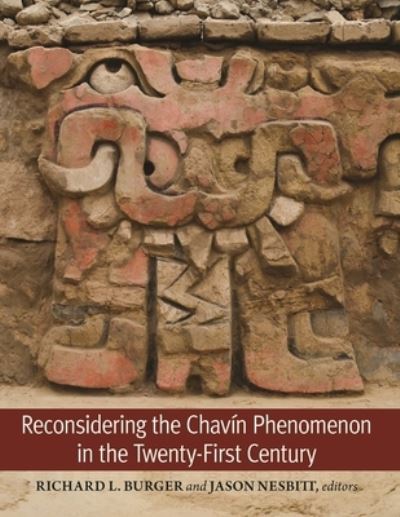
The UNESCO World Heritage Site of Chavìn de Huántar holds an iconic place in the archaeology of pre-Columbian Peru and is crucial to understanding the emergence of Andean civilization during the early first millennium BCE. Best known for its elaborate religious architecture and distinctive stone sculpture, Chavìn de Huántar was the center of a much wider Andean world and the synchronicity of widespread socioeconomic changes coupled with intrusive Chavìn material culture and iconography at distant centers suggests that Chavìn de Huántar influenced a vast region through the expansion of religious ideology and intensified long-distance interaction.
Reconsidering the Chavìn Phenomenon in the Twenty-First Century builds upon a surge of archaeological research over the last twenty years, bringing together the work of scholars researching Chavìn de Huántar and its neighbors on the coast, highlands, and ceja de selva. This volume offers a cohesive vision of the Chavìn Phenomenon at both the local and interregional level, one which recognizes the high degree of socioeconomic and cultural diversity that existed and the active role of centers outside the Chavìn heartland in shaping the radical transformations that occurred within the Chavìn Interaction Sphere between 1000 and 400 BCE.
| ISBN: | 9780884024996 |
| Publication date: | 24th November 2023 |
| Author: | PreColumbian Studies Symposium Reconsidering the Chavín Phenomenon in the TwentyFirst Century |
| Publisher: | Dumbarton Oaks an imprint of Harvard University Press |
| Format: | Hardback |
| Pagination: | 432 pages |
| Series: | Dumbarton Oaks Pre-Columbian Symposia and Colloquia |
| Genres: |
Archaeology History of the Americas Anthropology |
The UNESCO World Heritage Site of Chavìn de Huántar holds an iconic place in the archaeology of pre-Columbian Peru and is crucial to understanding the emergence of Andean civilization during the early first millennium BCE. Best known for its elaborate religious architecture and distinctive stone sculpture, Chavìn de Huántar was the center of a much wider Andean world and the synchronicity of widespread socioeconomic changes coupled with intrusive Chavìn material culture and iconography at distant centers suggests that Chavìn de Huántar influenced a vast region through the expansion of religious ideology and intensified long-distance interaction.
Reconsidering the Chavìn Phenomenon in the Twenty-First Century builds upon a surge of archaeological research over the last twenty years, bringing together the work of scholars researching Chavìn de Huántar and its neighbors on the coast, highlands, and ceja de selva. This volume offers a cohesive vision of the Chavìn Phenomenon at both the local and interregional level, one which recognizes the high degree of socioeconomic and cultural diversity that existed and the active role of centers outside the Chavìn heartland in shaping the radical transformations that occurred within the Chavìn Interaction Sphere between 1000 and 400 BCE.
Reconsidering the Chavín Phenomenon in the Twenty-First Century features in the following genres: Archaeology, History of the Americas, Anthropology
Reconsidering the Chavín Phenomenon in the Twenty-First Century is available in Hardback
Reconsidering the Chavín Phenomenon in the Twenty-First Century was written by PreColumbian Studies Symposium Reconsidering the Chavín Phenomenon in the TwentyFirst Century and published by Dumbarton Oaks an imprint of Harvard University Press
Reconsidering the Chavín Phenomenon in the Twenty-First Century has 432 pages
Yes it is part of Dumbarton Oaks Pre-Columbian Symposia and Colloquia series