

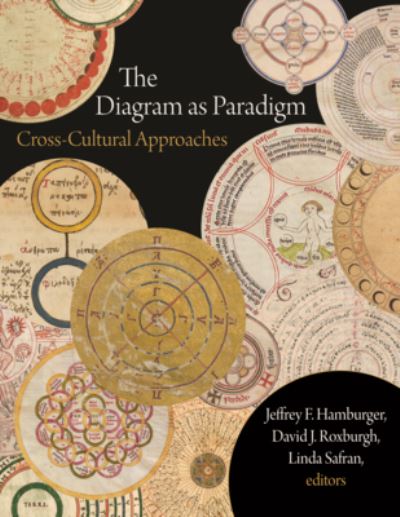
The Diagram as Paradigm is the first book that looks at medieval diagrams in a cross-cultural perspective, focusing on three regions-Byzantium, the Islamicate world, and the Latin West-each culturally diverse and each closely linked to the others through complex processes of intellectual, artistic, diplomatic, and mercantile exchange.
The volume unites case studies, often of little-known material, by an international set of specialists, and is prefaced by four introductory essays that provide broad overviews of diagrammatic traditions in these regions in addition to considering the theoretical dimensions of diagramming. Among the historical disciplines whose use of diagrams is explored are philosophy, theology, mysticism, music, medicine, mathematics, astronomy, and cosmology. Despite the sheer variety, ingenuity, and visual inventiveness of diagrams from the premodern world, in conception and practical use they often share many similarities, both in construction and application. Diagrams prove to be an essential part of the fabric of premodern intellectual, scientific, religious, artistic, and artisanal life.
| ISBN: | 9780884024866 |
| Publication date: | 30th September 2022 |
| Author: | Jeffrey F Hamburger, David J Roxburgh, Linda Safran |
| Publisher: | Dumbarton Oaks an imprint of Harvard University Press |
| Format: | Hardback |
| Pagination: | 563 pages |
| Series: | Dumbarton Oaks Byzantine Symposia and Colloquia |
| Genres: |
History of art Middle Eastern history History of other geographical groupings and regions History and Archaeology |
The Diagram as Paradigm is the first book that looks at medieval diagrams in a cross-cultural perspective, focusing on three regions-Byzantium, the Islamicate world, and the Latin West-each culturally diverse and each closely linked to the others through complex processes of intellectual, artistic, diplomatic, and mercantile exchange.
The volume unites case studies, often of little-known material, by an international set of specialists, and is prefaced by four introductory essays that provide broad overviews of diagrammatic traditions in these regions in addition to considering the theoretical dimensions of diagramming. Among the historical disciplines whose use of diagrams is explored are philosophy, theology, mysticism, music, medicine, mathematics, astronomy, and cosmology. Despite the sheer variety, ingenuity, and visual inventiveness of diagrams from the premodern world, in conception and practical use they often share many similarities, both in construction and application. Diagrams prove to be an essential part of the fabric of premodern intellectual, scientific, religious, artistic, and artisanal life.
The Diagram as Paradigm features in the following genres: History of art, Middle Eastern history, History of other geographical groupings and regions, History and Archaeology
The Diagram as Paradigm is available in Hardback
The Diagram as Paradigm was written by Jeffrey F Hamburger, David J Roxburgh, Linda Safran and published by Dumbarton Oaks an imprint of Harvard University Press
The Diagram as Paradigm has 563 pages
Yes it is part of Dumbarton Oaks Byzantine Symposia and Colloquia series
£63.86