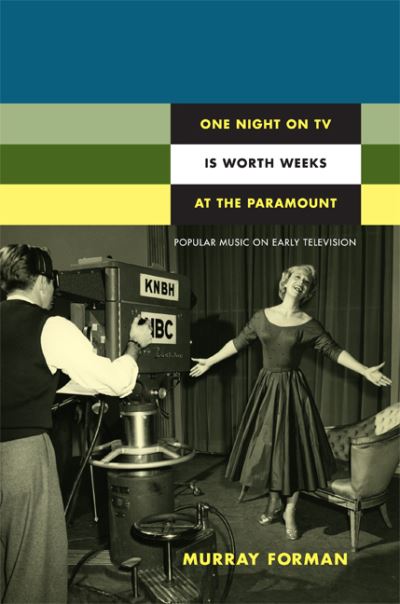
One Night on TV Is Worth Weeks at the Paramount Synopsis
Elvis Presley's television debut in January 1956 is often cited as the moment when popular music and television came together. Murray Forman challenges that contention, revealing popular music as crucial to television years before Presley's sensational small-screen performances. Drawing on trade and popular journalism, internal television and music industry documents, and records of audience feedback, Forman provides a detailed history of the incorporation of musical performances into TV programming during the medium's formative years, from 1948 to 1955. He examines how executives in the music and television industries understood and responded to the convergence of the two media; how celebrity musicians such as Vaughn Monroe, Frank Sinatra, and Fred Waring struggled to adjust to television; and how relative unknowns with an intuitive feel for the medium were sometimes catapulted to stardom. Forman argues that early television production influenced the aesthetics of musical performance in the 1940s and 1950s, particularly those of emerging musical styles such as rock and roll. At the same time, popular music helped to shape the nascent medium of television-its technologies, program formats, and industry structures. Popular music performances were essential to the allure and success of TV in its early years.
Buy from our bookstore and 25% of the cover price will be given to a school of your choice to buy more books. *15% of eBooks.
Frequently asked questions
Elvis Presley's television debut in January 1956 is often cited as the moment when popular music and television came together. Murray Forman challenges that contention, revealing popular music as crucial to television years before Presley's sensational small-screen performances. Drawing on trade and popular journalism, internal television and music industry documents, and records of audience feedback, Forman provides a detailed history of the incorporation of musical performances into TV programming during the medium's formative years, from 1948 to 1955. He examines how executives in the music and television industries understood and responded to the convergence of the two media; how celebrity musicians such as Vaughn Monroe, Frank Sinatra, and Fred Waring struggled to adjust to television; and how relative unknowns with an intuitive feel for the medium were sometimes catapulted to stardom. Forman argues that early television production influenced the aesthetics of musical performance in the 1940s and 1950s, particularly those of emerging musical styles such as rock and roll. At the same time, popular music helped to shape the nascent medium of television-its technologies, program formats, and industry structures. Popular music performances were essential to the allure and success of TV in its early years.
One Night on TV Is Worth Weeks at the Paramount features in the following genres: Television, Reference works, Music
One Night on TV Is Worth Weeks at the Paramount is available in Hardback, Paperback
One Night on TV Is Worth Weeks at the Paramount was written by Murray Forman and published by Duke University Press
One Night on TV Is Worth Weeks at the Paramount has 424 pages
Join our community for the latest bookish news, reading recommendations, exclusive opening extracts, author events and competitions. It\'s all free. And enter a monthly draw to win a £50 Gift Card. See past winners here