

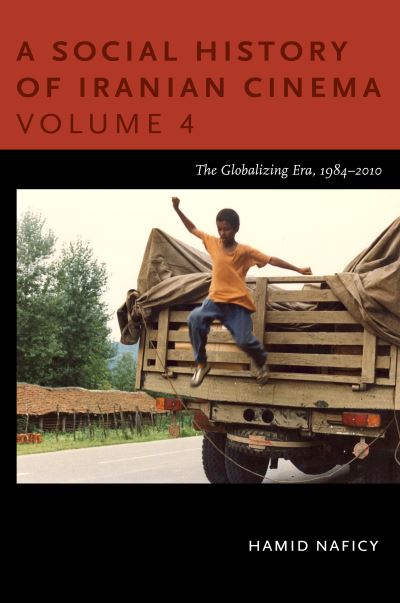
The extraordinary efflorescence in Iranian film, TV, and the new media since the consolidation of the Islamic Revolution animates Volume 4. During this time, documentary films proliferated. Many filmmakers took as their subject the revolution and the bloody eight-year war with Iraq; others critiqued postrevolution society. The strong presence of women on screen and behind the camera led to a dynamic women's cinema. A dissident art-house cinema-involving some of the best Pahlavi-era new-wave directors and a younger generation of innovative postrevolution directors-placed Iranian cinema on the map of world cinemas, bringing prestige to Iranians at home and abroad. A struggle over cinema, media, culture, and, ultimately, the legitimacy of the Islamic Republic, emerged and intensified. The media became a contested site of public diplomacy as the Islamic Republic regime as well as foreign governments antagonistic to it sought to harness Iranian popular culture and media toward their own ends, within and outside of Iran. The broad international circulation of films made in Iran and its diaspora, the vast dispersion of media-savvy filmmakers abroad, and new filmmaking and communication technologies helped to globalize Iranian cinema.
A Social History of Iranian Cinema
Volume 1: The Artisanal Era, 1897–1941
Volume 2: The Industrializing Years, 1941–1978
Volume 3: The Islamicate Period, 1978–1984
Volume 4: The Globalizing Era, 1984–2010
| ISBN: | 9780822348788 |
| Publication date: | 6th November 2012 |
| Author: | Hamid Naficy |
| Publisher: | Duke University Press |
| Format: | Paperback |
| Pagination: | 631 pages |
| Genres: |
Film history, theory or criticism Middle Eastern history |
The extraordinary efflorescence in Iranian film, TV, and the new media since the consolidation of the Islamic Revolution animates Volume 4. During this time, documentary films proliferated. Many filmmakers took as their subject the revolution and the bloody eight-year war with Iraq; others critiqued postrevolution society. The strong presence of women on screen and behind the camera led to a dynamic women's cinema. A dissident art-house cinema-involving some of the best Pahlavi-era new-wave directors and a younger generation of innovative postrevolution directors-placed Iranian cinema on the map of world cinemas, bringing prestige to Iranians at home and abroad. A struggle over cinema, media, culture, and, ultimately, the legitimacy of the Islamic Republic, emerged and intensified. The media became a contested site of public diplomacy as the Islamic Republic regime as well as foreign governments antagonistic to it sought to harness Iranian popular culture and media toward their own ends, within and outside of Iran. The broad international circulation of films made in Iran and its diaspora, the vast dispersion of media-savvy filmmakers abroad, and new filmmaking and communication technologies helped to globalize Iranian cinema.
A Social History of Iranian Cinema
Volume 1: The Artisanal Era, 1897–1941
Volume 2: The Industrializing Years, 1941–1978
Volume 3: The Islamicate Period, 1978–1984
Volume 4: The Globalizing Era, 1984–2010
A Social History of Iranian Cinema. Volume 4 The Globalizing Era, 1984-2010 features in the following genres: Film history, theory or criticism, Middle Eastern history
A Social History of Iranian Cinema. Volume 4 The Globalizing Era, 1984-2010 is available in Paperback, Hardback
A Social History of Iranian Cinema. Volume 4 The Globalizing Era, 1984-2010 was written by Hamid Naficy and published by Duke University Press
A Social History of Iranian Cinema. Volume 4 The Globalizing Era, 1984-2010 has 631 pages