

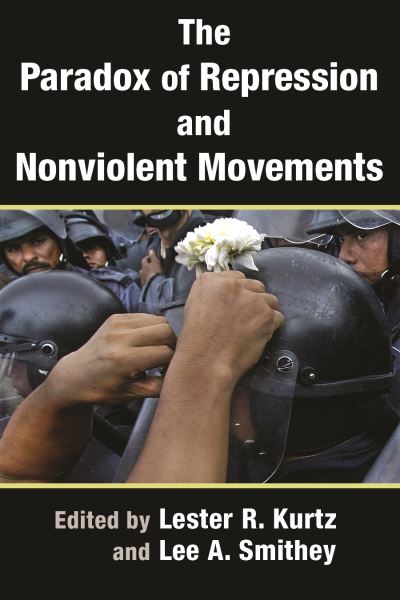
Political repression often paradoxically fuels popular movements rather than undermining resistance. When authorities respond to strategic nonviolent action with intimidation, coercion, and violence, they often undercut their own legitimacy, precipitating significant reforms or even governmental overthrow. Brutal repression of a movement is often a turning point in its history: Bloody Sunday in the March to Selma led to the passage of civil rights legislation by the US Congress, and the Amritsar Massacre in India showed the world the injustice of the British Empire's use of force in maintaining control over its colonies.
Activists in a wide range of movements have engaged in nonviolent strategies of repression management that can raise the likelihood that repression will cost those who use it. The Paradox of Repression and Nonviolent Movements brings scholars and activists together to address multiple dimensions and significant cases of this phenomenon, including the relational nature of nonviolent struggle and the cultural terrain on which it takes place, the psychological costs for agents of repression, and the importance of participation, creativity, and overcoming fear, whether in the streets or online.
| ISBN: | 9780815635642 |
| Publication date: | 30th May 2018 |
| Author: | Lester R Kurtz, Lee A Smithey, Brian Martin |
| Publisher: | Syracuse University Press |
| Format: | Hardback |
| Pagination: | 368 pages |
| Series: | Syracuse Studies on Peace and Conflict Resolution |
| Genres: |
Political science and theory Gender studies: men and boys Anthropology Political activism / Political engagement |
Political repression often paradoxically fuels popular movements rather than undermining resistance. When authorities respond to strategic nonviolent action with intimidation, coercion, and violence, they often undercut their own legitimacy, precipitating significant reforms or even governmental overthrow. Brutal repression of a movement is often a turning point in its history: Bloody Sunday in the March to Selma led to the passage of civil rights legislation by the US Congress, and the Amritsar Massacre in India showed the world the injustice of the British Empire's use of force in maintaining control over its colonies.
Activists in a wide range of movements have engaged in nonviolent strategies of repression management that can raise the likelihood that repression will cost those who use it. The Paradox of Repression and Nonviolent Movements brings scholars and activists together to address multiple dimensions and significant cases of this phenomenon, including the relational nature of nonviolent struggle and the cultural terrain on which it takes place, the psychological costs for agents of repression, and the importance of participation, creativity, and overcoming fear, whether in the streets or online.
The Paradox of Repression and Nonviolent Movements features in the following genres: Political science and theory, Gender studies: men and boys, Anthropology, Political activism / Political engagement
The Paradox of Repression and Nonviolent Movements is available in Hardback
The Paradox of Repression and Nonviolent Movements was written by Lester R Kurtz, Lee A Smithey, Brian Martin and published by Syracuse University Press
The Paradox of Repression and Nonviolent Movements has 368 pages
Yes it is part of Syracuse Studies on Peace and Conflict Resolution series
£46.80