

The inside story of political protest in Saudi Arabia-on the ground, in the suburbs, and in the face of increasing state repression.
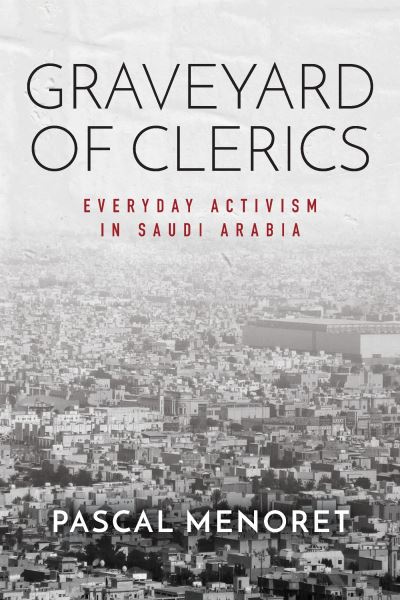
Graveyard of Clerics takes up two global phenomena intimately linked in Saudi Arabia: urban sprawl and religious activism. Saudi suburbia emerged after World War II as citizens fled crowded inner cities. Developed to encourage a society of docile, isolated citizens, suburbs instead opened new spaces for political action. Religious activists in particular turned homes, schools, mosques, and summer camps into resources for mobilization. With the support of suburban grassroots networks, activists won local elections and found opportunities to protest government actions-until they faced a new wave of repression under the current Saudi leadership.
Pascal Menoret spent four years in Saudi Arabia in the places where today's Islamic activism first emerged. With this book, he tells the stories of the people actively countering the Saudi state and highlights how people can organize and protest even amid increasingly intense police repression. This book changes the way we look at religious activism in Saudi Arabia. It also offers a cautionary tale: the ongoing repression by Saudi elites-achieved often with the complicity of the international community-is shutting down grassroots political movements with significant consequences for the country and the world.
| ISBN: | 9780804799805 |
| Publication date: | 7th July 2020 |
| Author: | Pascal Ménoret |
| Publisher: | Stanford University Press |
| Format: | Hardback |
| Pagination: | 250 pages |
| Series: | Stanford Studies in Middle Eastern and Islamic Societies and Cultures |
| Genres: |
Social groups: religious groups and communities Middle Eastern history |
The inside story of political protest in Saudi Arabia-on the ground, in the suburbs, and in the face of increasing state repression.
Graveyard of Clerics takes up two global phenomena intimately linked in Saudi Arabia: urban sprawl and religious activism. Saudi suburbia emerged after World War II as citizens fled crowded inner cities. Developed to encourage a society of docile, isolated citizens, suburbs instead opened new spaces for political action. Religious activists in particular turned homes, schools, mosques, and summer camps into resources for mobilization. With the support of suburban grassroots networks, activists won local elections and found opportunities to protest government actions-until they faced a new wave of repression under the current Saudi leadership.
Pascal Menoret spent four years in Saudi Arabia in the places where today's Islamic activism first emerged. With this book, he tells the stories of the people actively countering the Saudi state and highlights how people can organize and protest even amid increasingly intense police repression. This book changes the way we look at religious activism in Saudi Arabia. It also offers a cautionary tale: the ongoing repression by Saudi elites-achieved often with the complicity of the international community-is shutting down grassroots political movements with significant consequences for the country and the world.
Graveyard of Clerics features in the following genres: Social groups: religious groups and communities, Middle Eastern history
Graveyard of Clerics is available in Hardback
Graveyard of Clerics was written by Pascal Ménoret and published by Stanford University Press
Graveyard of Clerics has 250 pages
Yes it is part of Stanford Studies in Middle Eastern and Islamic Societies and Cultures series