

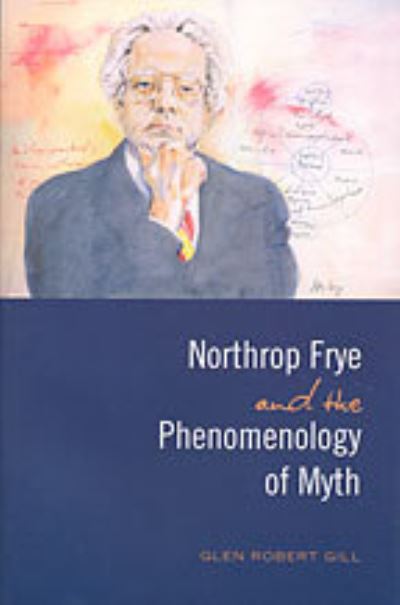
In Northrop Frye and the Phenomenology of Myth, Glen Robert Gill compares Frye's theories about myth to those of three other major twentieth-century mythologists: C.G. Jung, Joseph Campbell, and Mircea Eliade. Gill explores the theories of these respective thinkers as they relate to Frye's discussions of the phenomenological nature of myth, as well as its religious, literary, and psychological significance.
Gill substantiates Frye's work as both more radical and more tenable than that of his three contemporaries. Eliade's writings are shown to have a metaphysical basis that abrogates an understanding of myth as truly phenomenological, while Jung's theory of the collective unconscious emerges as similarly problematic. Likewise, Gill argues, Campbell's work, while incorporating some phenomenological progressions, settles on a questionable metaphysical foundation. Gill shows how, in contrast to these other mythologists, Frye's theory of myth - first articulated in Fearful Symmetry (1947) and culminating in Words with Power (1990) - is genuinely phenomenological.
With excursions into fields such as literary theory, depth psychology, theology, and anthropology, Northrop Frye and the Phenomenology of Myth is essential to the understanding of Frye's important mythological work.
| ISBN: | 9780802094049 |
| Publication date: | 16th December 2006 |
| Author: | Glen Robert Gill |
| Publisher: | University of Toronto Press |
| Format: | Paperback |
| Pagination: | 240 pages |
| Series: | Frye Studies |
| Genres: |
Literature: history and criticism |
In Northrop Frye and the Phenomenology of Myth, Glen Robert Gill compares Frye's theories about myth to those of three other major twentieth-century mythologists: C.G. Jung, Joseph Campbell, and Mircea Eliade. Gill explores the theories of these respective thinkers as they relate to Frye's discussions of the phenomenological nature of myth, as well as its religious, literary, and psychological significance.
Gill substantiates Frye's work as both more radical and more tenable than that of his three contemporaries. Eliade's writings are shown to have a metaphysical basis that abrogates an understanding of myth as truly phenomenological, while Jung's theory of the collective unconscious emerges as similarly problematic. Likewise, Gill argues, Campbell's work, while incorporating some phenomenological progressions, settles on a questionable metaphysical foundation. Gill shows how, in contrast to these other mythologists, Frye's theory of myth - first articulated in Fearful Symmetry (1947) and culminating in Words with Power (1990) - is genuinely phenomenological.
With excursions into fields such as literary theory, depth psychology, theology, and anthropology, Northrop Frye and the Phenomenology of Myth is essential to the understanding of Frye's important mythological work.
Northrop Frye and the Phenomenology of Myth features in the following genres: Literature: history and criticism
Northrop Frye and the Phenomenology of Myth is available in Hardback, Paperback, Ebook
Northrop Frye and the Phenomenology of Myth was written by Glen Robert Gill and published by University of Toronto Press
Northrop Frye and the Phenomenology of Myth has 240 pages
Yes it is part of Frye Studies series