

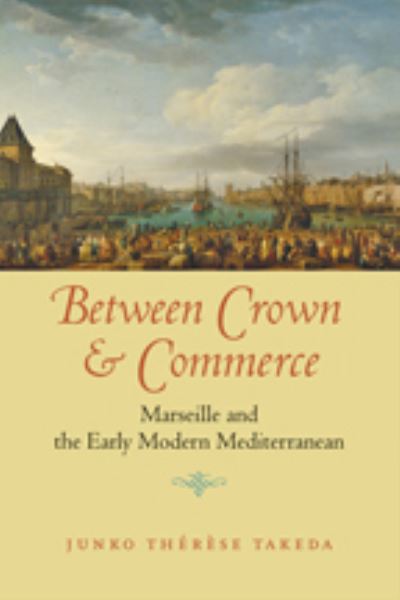
Between Crown and Commerce examines the relationship between French royal statecraft, mercantilism, and civic republicanism in the context of the globalizing economy of the early modern Mediterranean world.
This is the story of how the French Crown and local institutions accommodated one another as they sought to forge acceptable political and commercial relationships with one another for the common goal of economic prosperity. Junko Thérèse Takeda tells this tale through the particular experience of Marseille, a port the monarchy saw as key to commercial expansion in the Mediterranean.
At first, Marseille's commercial and political elites were strongly opposed to the Crown's encroaching influence. Rather than dismiss their concerns, the monarchy cleverly co-opted their civic traditions, practices, and institutions to convince the city's elite of their important role in Levantine commerce. Chief among such traditions were local ideas of citizenship and civic virtue. As the city's stature throughout the Mediterranean grew, however, so too did the dangers of commercial expansion as exemplified by the arrival of the bubonic plague. Marseille's citizens reevaluated citizenship and merchant virtue during the epidemic, while the French monarchy's use of the crisis as an opportunity to further extend its power reanimated republican vocabulary.
Between Crown and Commerce deftly combines a political and intellectual history of state-building, mercantilism, and republicanism with a cultural history of medical crisis. In doing so, the book highlights the conjoined history of broad transnational processes and local political change.
| ISBN: | 9780801899829 |
| Publication date: | 27th May 2011 |
| Author: | Junko Thérèse Takeda |
| Publisher: | Johns Hopkins University Press |
| Format: | Hardback |
| Pagination: | 258 pages |
| Series: | The Johns Hopkins University Studies in Historical and Political Science |
| Genres: |
European history Economic history |
Between Crown and Commerce examines the relationship between French royal statecraft, mercantilism, and civic republicanism in the context of the globalizing economy of the early modern Mediterranean world.
This is the story of how the French Crown and local institutions accommodated one another as they sought to forge acceptable political and commercial relationships with one another for the common goal of economic prosperity. Junko Thérèse Takeda tells this tale through the particular experience of Marseille, a port the monarchy saw as key to commercial expansion in the Mediterranean.
At first, Marseille's commercial and political elites were strongly opposed to the Crown's encroaching influence. Rather than dismiss their concerns, the monarchy cleverly co-opted their civic traditions, practices, and institutions to convince the city's elite of their important role in Levantine commerce. Chief among such traditions were local ideas of citizenship and civic virtue. As the city's stature throughout the Mediterranean grew, however, so too did the dangers of commercial expansion as exemplified by the arrival of the bubonic plague. Marseille's citizens reevaluated citizenship and merchant virtue during the epidemic, while the French monarchy's use of the crisis as an opportunity to further extend its power reanimated republican vocabulary.
Between Crown and Commerce deftly combines a political and intellectual history of state-building, mercantilism, and republicanism with a cultural history of medical crisis. In doing so, the book highlights the conjoined history of broad transnational processes and local political change.
Between Crown and Commerce features in the following genres: European history, Economic history
Between Crown and Commerce is available in Hardback
Between Crown and Commerce was written by Junko Thérèse Takeda and published by Johns Hopkins University Press
Between Crown and Commerce has 258 pages
Yes it is part of The Johns Hopkins University Studies in Historical and Political Science series